The Nervous System’s Role In Mold Recovery
You left the water-damaged building. You took the binders. You supported your detox pathways, changed your diet, treated your gut, and addressed infections, hormones, or mitochondrial dysfunction.
And yet, your body still seems to react to everything.
Foods that were once safe suddenly cause symptoms. Supplements that are supposed to help make you feel worse. Smells, sounds, appointments, stressful conversations, or small changes in your environment can send your body into a flare.
You may feel exhausted but unable to rest. Anxious even when nothing is obviously wrong. Constantly alert to your symptoms, your surroundings, or the possibility of another exposure.
When this happens, it usually means that mold illness has affected more than your body.
It has also changed the way your brain and nervous system perceive safety.
For many people, understanding the relationship between the nervous system and mold recovery is the missing piece that finally explains why their body has struggled to heal.
Mold Illness Is More Than a Detoxification Problem
Mold recovery is often presented as a relatively straightforward process:
Identify and leave the exposure.
Bind and eliminate toxins.
Treat the downstream effects.
Allow the body to recover.
Reducing exposure and supporting detoxification are essential. But mold illness is rarely limited to one biological pathway.
It can affect the body, the brain, and the autonomic nervous system equally.
That is why I view mold illness as a multi-system injury, rather than simply a problem of accumulated toxins.
If one major part of that interconnected system remains dysregulated, the body may have difficulty responding to even a well-designed treatment plan.
The nervous system is not an optional wellness add-on to mold recovery. It’s essential because it helps regulate many of the functions your body relies on to heal, including:
Digestion and nutrient absorption
Immune regulation
Inflammatory signaling
Sleep and circadian rhythm
Heart rate and blood pressure
Hormone production
Pain perception
Energy production and utilization
Detoxification and elimination
Tissue maintenance and repair
When the nervous system remains in a prolonged survival state, all of these processes can be impaired, so healing stalls.
Prefer to watch rather than read?
I explain this topic in the video below. You can watch the full video here, or keep reading for the written version.
How Mold Illness Can Put the Nervous System Into Survival Mode
The limbic system is a part of the brain involved in emotion, memory, and the determination of whether something feels safe or dangerous.
You can think of it as part of your brain’s internal safety scanner.
During a perceived life or death threat, this system helps mobilize the body to survive.
It activates changes in heart rate, blood pressure, breathing, muscle tension, immune signaling, digestion, detoxification, attention, and energy allocation.
That response is extremely useful when danger is immediate.
The problem arises when the brain continues to think you’re in danger long after the original threat has changed or passed.
Mold illness can contribute to this persistent alarm state in two important ways.
1. Mold exposure can create direct physiological stress to the limbic system
Mycotoxins are a potent physiological stressor on the body and brain.
In fact, mycotoxins have been shown to end up directly in the limbic system (the internal safety scanner), where they cause significant inflammation, oxidative stress, neuronal damage, changes to neural signaling, mood, and behavior.
When the body is repeatedly exposed to substances it experiences as harmful, the nervous system receives a very real message:
Something in this environment is not safe.
This is not imagined, and it is not simply anxiety.
The alarm response may begin as an appropriate reaction to a genuine physiological threat.
Unfortunately, that alarm can stay stuck in the on position, even after you’ve made it to a mold-safe environment, and that makes it hard to heal completely.
2. The experience of mold illness can itself become traumatic
Mold illness can also be deeply destabilizing.
Many people spend years trying to understand why they are sick. Their symptoms may be frightening, unpredictable, or dismissed by practitioners who do not recognize the condition.
Their home may no longer feel safe. They may need to remediate, move, discard belongings, leave a job, or make expensive decisions while cognitively impaired and physically unwell.
Some lose relationships, financial stability, independence, or the ability to participate in the activities that once gave their life meaning.
When this level of uncertainty and distress continues for months or years, the nervous system can learn that danger is not temporary.
It is everywhere, all the time. That life itself isn’t safe, and you must always be on guard.
This creates a double burden: the body is managing the biological effects of exposure while the brain is also trying to protect the person from the lived experience of illness, loss, fear, and uncertainty.
so the limbic system, your inner danger scanner, gets further reinforcement that it should never turn off the danger alarm….and you get stuck in fight/flight or freeze as your new normal.
Why Survival Mode Can Make Healing More Difficult
When your brain perceives an immediate threat, it prioritizes survival over long-term maintenance.
Imagine that your nervous system believes you are being chased by a tiger. It will make energy available for your heart, lungs, muscles, heightened senses, and anything else necessary to run for your life. It will spend all your energy and more trying to make sure you live through the next moment.
Simultaneously, it will de-prioritize digesting lunch, detoxifying, producing reproductive hormones, entering deep restorative sleep, or repairing damaged tissues….because we don’t have unlimited amounts of energy, and every body process requires energy.
This is sometimes described as the body entering a form of physiological “battery saver mode.”
Enough energy is allocated to keep essential functions going, but many processes involved in maintaining and rebuilding health get put on the back burner.
That presents a major challenge in mold recovery because the very functions that may be suppressed by being stuck in survival mode are the ones you need most to recover, rebalance, and regain resilience.
Your body needs adequate detoxification capacity to process and eliminate the toxins from the water-damaged building.
It needs balanced immune activity to address infections, dysbiosis, fungal colonization, and excessive inflammation that were caused by the mold toxins and other biotoxins.
It needs deep sleep to support neurological recovery, cellular repair, detoxfication, and metabolic waste clearance.
It needs efficient energy production so that liver cells, kidney cells, intestinal cells, immune cells, and hormone-producing glands can perform their jobs. It needs sufficient energy to repair the damage caused by mycotoxins.
And it needs a nervous system that can signal: The immediate threat has passed. It is safe to use resources for healing now.
Signs the Nervous System May Be Affecting Your Mold Recovery
Nervous system dysregulation does not look the same in every person.
Some people feel visibly anxious, restless, or hypervigilant. Others feel exhausted, emotionally flat, disconnected, or shut down.
The common thread is that the body has lost some of its ability to adapt, recover, and return to equilibrium.
Nervous system involvement may be especially worth considering when:
Small amounts of treatment cause disproportionately intense reactions.
You react to many supplements, chemicals, EMFs, foods, smells, sounds, lights, or even brief mold exposures.
Your symptoms worsen with stress, worry, conflict, medical appointments, testing, or decision-making.
You constantly scan your body for signs that something is wrong.
You repeatedly check your surroundings for contamination or exposure.
You feel afraid of your home, belongings, food, treatments, or the outside world.
You struggle to sleep deeply or ever feel fully relaxed.
Minor physical or mental exertion causes a prolonged crash.
Your symptoms have improved physically, but you still don’t feel like yourself.
You remain caught in persistent rumination about your illness or recovery.
You feel simultaneously exhausted and unable to come out of high alert.
Your treatment plan looks appropriate on paper, but your body cannot tolerate or respond to it.
These patterns do not prove that every symptom is being caused by the nervous system.
They absolutely do not mean that your illness is psychological or “in your head”.
They suggest that the system responsible for regulating threat, adaptation, and recovery may need direct support alongside medical care so you can really start to heal.
Why Some People Begin Reacting to Nearly Everything
When you’ve experienced prolonged physical (toxic, immunolgical) and emotional stress, the nervous system goes into “hyper-alert mode” - like a dog that’s suffered abuse, and now barks at shadows and little sounds.
This sensitized nervous system has adapted to try to protect you.
The problem is that it has become overprotective.
It begins to respond to low-level or safe stimuli as though they represent significant danger.
A useful analogy is a smoke alarm that sounds every time you make toast. The alarm is functioning, but its sensitivity is no longer calibrated appropriately for the situation.
After mold illness, the brain may begin sounding alarms in response to:
Foods
Supplements
Medications
Chemicals
Fragrances
Building materials
Light and sound
Normal physical sensations
Small environmental changes
Medical treatments
Minor emotional stressors
Minor mold exposures
Even memories of previous exposures and worries about current or future exposures
The reaction may then reinforce the brain’s original conclusion.
You encounter a smell, experience symptoms, become frightened, and try to escape. The brain interprets that response as proof that the smell was dangerous, making the alarm more likely to activate next time.
Over time, this can make your world smaller and smaller.
Mold Illness Is Not Psychological
Mold toxins can create very real toxic, inflammatory, immunosuppressive, neurological, hormonal, and metabolic effects.
I want to be clear that retraining the brain to the point where it feels safe again does not replace getting to a mold-safe environment or supportive medical care.
In my experience, you cannot mindset your way out of a body's response to a significant toxic exposure, and I don't think that you should.
Nor do I think that you can diet or supplement your way out of a dysregulated nervous system that's keeping your body from full recovery.
I've heard some people say that if you just avoid all exposure, then your nervous system will re-regulate on its own and you'll heal fully. However, that isn't what I've seen in a lot of people.
Avoidance of significant exposures is an important part of recovery.
However, often the people who are the most anxious about avoidance are the ones who struggle to heal the most because their constant focus on the safety of their environment reiterates to their nervous system continually that they are not safe, and so their nervous system never gets into the calm, healing state needed for complete healing and rebalancing.
The Three Essential Components of Mold Recovery
In my experience, an effective mold recovery plan has three essential components, like a three-legged stool.
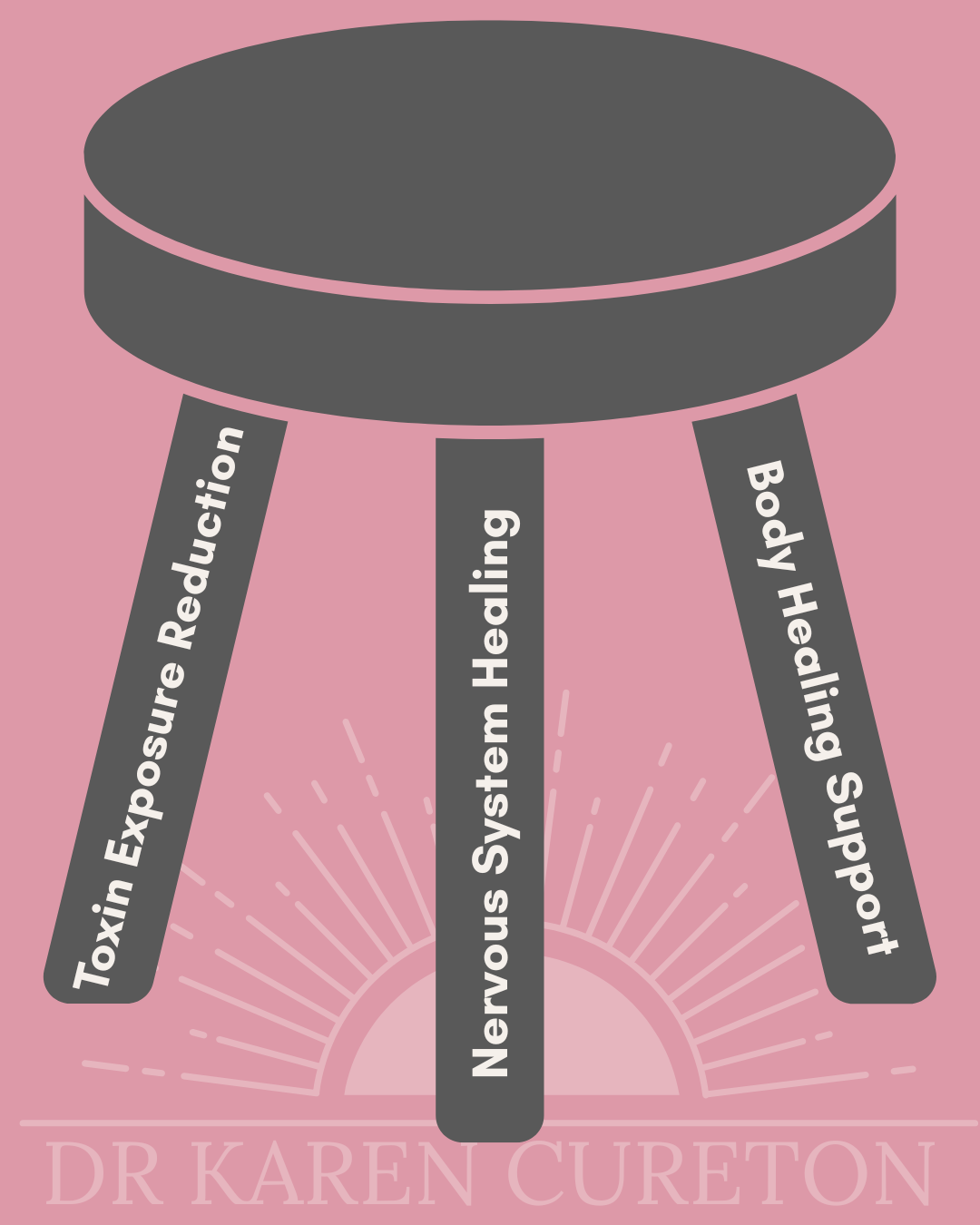
1. Reduce the toxic burden
Identifying exposure, improving the environment, remediating appropriately, relocating when necessary, and minimizing meaningful ongoing exposure is a necessary leg of the stool.
The goal is to create an environment that is sufficiently healthy for the individual body to recover.
2. Regulate and retrain the nervous system
The limbic system and nervous system need help moving out of persistent fight, flight, freeze, or shutdown.
This can include increasing the body’s capacity to experience safety, reducing hypervigilance, changing conditioned threat responses, improving autonomic flexibility, and rewiring traumatic experiences that continue to activate the alarm system.
Improving nervous system regulation, in turn, will activate the body’s innate healing capacity.
3. Support the body’s repair and rebalancing
Functional and naturopathic medicine tools can then address the specific effects the toxins had on the individual.
This might include support for detoxification, digestion, nutrient status, mitochondrial function, hormones, immune balance, sleep, inflammation, infections, or microbial colonization.
And this part must be tailored to the individual and their exposure to be effective.
All three components matter to full recovery from biotoxin illness.
Effective Brain Training for Mold and Chronic Illness Recovery
Many brain retraining programs use repetition to build new neural pathways associated with calm, safety, positive emotion, or a different response to symptoms.
These “practice makes perfect” methods can be extremely helpful for some people.
Through repeated practice, the brain strengthens new patterns until they become easier to access and eventually more automatic.
But repetition alone may not be enough for everyone.
Some people have memories, traumatic experiences, or deeply learned emotional associations that continue to inform the nervous system that it is not safe to relax.
Trying to repeatedly practice safety while those older threat programs remain active can feel like fighting an uphill battle.
In these cases, shifting the nervous system state provides temporary relief, but the fear, shutdown, and intense reactions just keep happening.
This was the case for me when I tried typical brain retraining methods.
Now, I liken this approach to trying to build your dream home on top of a garbage pile.
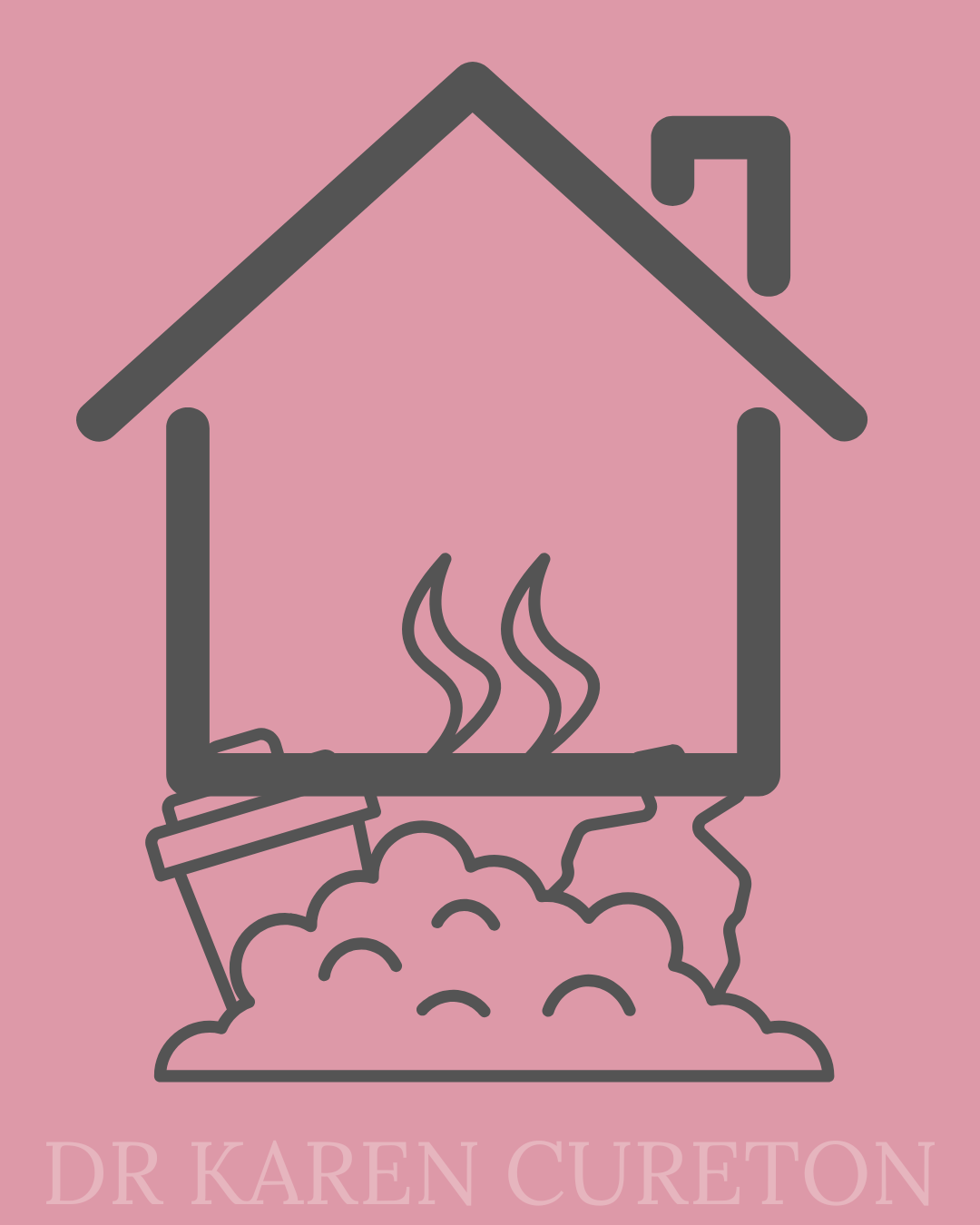
It never really feels stable enough to live in, and that awful stench keeps permeating everything.
The garbage pile, is the memories and traumas that your brain is using as “proof” for why you’re not safe to feel safe….even if you actually are safe enough to relax and heal now, and even if you logically think that you're safe.
The wild thing is, you can even logically think and know that you’re safe, while your nervous system keeps pulling the fire alarm.
Because the limbic system, which is responsible for whether or not the fire alarm gets activated, does not respond to logic.
It responds to your emotionally-charged memories to make that determination.
This is why I incorporate memory reconsolidation into my nervous system work.
What Is Memory Reconsolidation?
Memory reconsolidation is the brain’s natural process for updating memories (learnings).
Memories are not fixed recordings. This is extremely well-validated by modern neuroscience.
When a memory (old learning) is activated under the right conditions, it becomes editable with new information from the present moment.
Have you ever noticed that you’re experiencing one of your memories in third person or in black and white? Those are examples of memories that were changed through the natural mechanism of memory reconsolidation.
Our memories are actually designed to change so that we can update our understanding of the world as we age and acquire new experiences.
The other cool thing that neuroscience taught us is how this mechanism works.
Now we know how to harness this mechanism to update unsafe or traumatic feeling memories so that they stop triggering nervous system reactions in the present.

It's like updating the glitchy old software in your computer that's making it crash over and over again.
Once you remove the old glitchy software and install the new software onto the computer, finally the computer runs smoothly and responds the way you want it to.
And the same is true for your nervous system when the old threat programs are removed.
Now you can build your dream house on a solid foundation that smells like a fresh, clean start.
And I find that this is essential for many people struggling with nervous system dysregulation as part of a chronic illness or mold illness.
Because as I said earlier, for many people, the experience of chronic illness and mold illness in particular can be really stressful, even traumatic, and that really changes the way your limbic system perceives and responds to life, usually in such a way that says, "Life no longer feels safe."
And for many of us, chronic illness or mold illness may not have even been our first traumatic experience in life. So our nervous systems going into chronic illness may not have felt safe or on steady ground already.
And when that's the case, the toxic exposure and the experience of getting really ill can amplify the dysregulation that was already present and leave us stuck in survival mode that much easier.
That was the case for me and for many of my patients who've gotten stuck with just trying to use functional medicine or lifestyle changes or even typical brain retraining methods to heal.
The goal of using memory reconsolidation is not to erase what happened, deny the seriousness of the experience, or convince yourself that the exposure was harmless.
You will not forget that it ever happened or lose the wisdom you gained from the experience.
What we’re using memory reconsolidation for, is to help the nervous system recognize that an experience from the past is not happening in the present….so your nervous system can stop freaking out and producing a reaction as if it is.
When those threat-based learnings change at a deeper level, nervous system regulation becomes much more accessible and sustainable…..and all of those “practice makes perfect” tools for teaching your brain a new default of feeling safe…finally start working.
Then, you’re no longer constantly having to turn off the fire alarm when you simply burn some toast….
You brain finally understands that burned toast doesn’t require the fire alarm.
What Can Change When the Nervous System Begins to Feel Safer?
Limbic system and nervous system recalibration can dramatically increase healing capacity.
Some common shifts include:
Improved tolerance of supplements and treatment protocols
Less intense reactivity to foods, smells, or environments
Deeper and more restorative sleep
Greater digestive capacity
Reduced symptom hypervigilance
More stable energy
Better recovery after physical or mental activity
Improved emotional resilience
Less fear surrounding the body and environment
Greater ability to distinguish genuine danger from an overactive alarm
Increased capacity for detoxification, immune regulation, rebalancing, and all other body functions needed for maintenance and repair.
You Cannot Fully Heal in Survival Mode
If you have done everything you were told to do and still feel stuck, it does not mean your body is broken.
It may mean your body is still protecting you.
The question may not be:
What stronger protocol do I need?
A more useful question may be:
What does my system need in order to feel safe enough to heal and regain resilience?
Mold toxicity can affect the body in profoundly physical ways. It can also alter the brain, limbic system, autonomic nervous system, and your felt sense of safety in your body and the world.
For many people, recovery therefore needs to include both sides:
Physical support to reduce exposure and repair the body
Nervous system support to help the body come out of persistent survival mode
You deserve an approach that does not dismiss the biological realities of mold illness or overlook the neurological and emotional effects of living through it.
Your symptoms are not a personal failure. Your body is not working against you.
It may be using an old protective strategy that once made sense, and but now needs a software update so you can get back to living your best life.
Support for Both Your Body and Nervous System
I’m a naturopathic doctor specializing in mold illness, complex chronic illness, and nervous system health. I also understand this experience personally, having lived through both toxic mold illness and the nervous system dysregulation that can accompany it.
My approach brings together functional medicine, individualized mold-recovery support, nervous system regulation, and memory reconsolidation.
Rather than asking you to choose between physical treatment and brain retraining, we look at how the body, brain, environment, and lived experience may be interacting.
If you’re ready for a mold recovery plan that addresses both your physiology and your nervous system, you can explore working with meor schedule a discovery call to discuss the support that may be most appropriate for you.
Medical Disclaimer: This article is for educational and informational purposes only and is not intended to provide medical advice, diagnosis, or treatment. Always consult with a qualified healthcare professional regarding your individual health needs.