
Frequency Specific Microcurrent
More healing support doesn't always have to mean more supplements.
When you're dealing with a complex chronic illness, there can come a point when your treatment plan starts to feel like a full-time job.
Another supplement. Another medication. Another protocol.
And if you're highly sensitive, sometimes the very things that are supposed to help you are difficult for your body to tolerate.
This is one of the reasons I use Frequency Specific Microcurrent (FSM) so extensively in my practice.
This therapy gives my patients a convenient, at-home way to support their body's healing without asking the digestive system to absorb another substance or the liver and kidneys to process another medication.
For many of my patients, frequency medicine becomes an essential part of the larger treatment plan.
Both because it’s extremely well-tolerated and effective, but also because it can help the body respond better to everything else we’re doing and speed up results overall. How does it do this? By supporting the body’s innate healing mechanisms.
What Is Frequency Specific Microcurrent?
Frequency Specific Microcurrent, usually called FSM, is a form of low-level electrical stimulation that uses extremely small amounts of current combined with specific frequencies.
Traditional FSM uses two channels to deliver pairs of frequencies through microamp-level electrical current. The current is so small that traditional FSM treatment is generally below the level a person can feel.
This is the same amount of current your body produces naturally, so we’re working with its normal functioning, not overpowering it.
The frequencies selected depend on what we're trying to support in the body. We select frequencies for what’s wrong in the tissue (like inflammation, injury, scarring, or toxicity) and pair them with the frequency for the tissue we’re trying to treat (like the vagus nerve, small intestine, or ligament). The precise combination match with what the person’s body needs is what produces the results.
In my practice, I deliver customized frequency protocols through an iCare frequency-specific PEMF home unit.
Instead of passing microcurrent directly through the body, the iCare uses a pulsed magnetic field to deliver the specific, programmed frequency pairs through a small pad placed near the body.
That makes frequency support something my patients can use regularly at home, including while moving around the house, working, or sleeping.
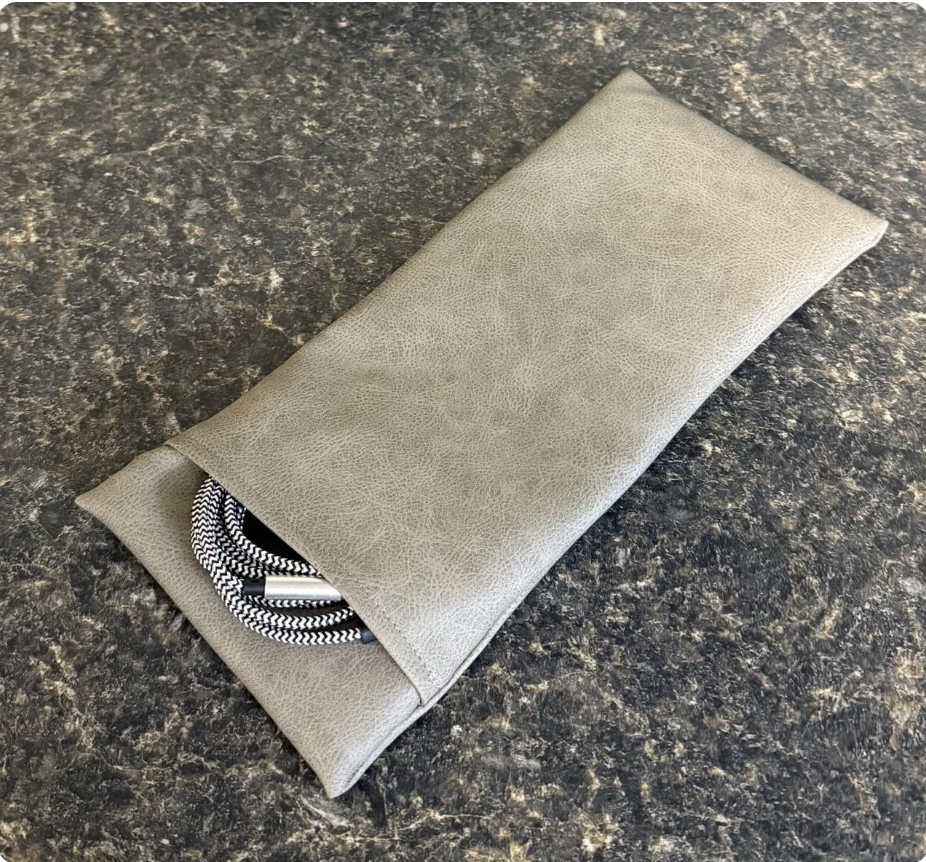
The device is so small, you can bring it in your purse, put it in your waistband, or under your pillow. It’s incredibly convenient for such a powerful tool (see picture above!). And because it is so powerful, you have to get it through a healthcare provider trained in how to program and use it.
Why I Use Frequency Specific Microcurrent With So Many of My Patients
Complex chronic illness rarely involves one isolated problem.
A patient may simultaneously be dealing with toxicity, inflammation, immune dysregulation, poor sleep, autonomic nervous system dysfunction, impaired tissue repair, chronic infections, pain, gut dysfunction and difficulty tolerating treatment.
Trying to address every one of those problems by adding another supplement isn't always the best answer.
Especially when the patient is already overwhelmed.
Frequency medicine gives me another tool.
Depending on the person and what we're working on, I may incorporate customized frequency protocols to support:
Nervous system regulation
Sleep
Inflammation regulation
Mold and biotoxin recovery
Pain and physical recovery
Mast cell and histamine-related patterns
Immune function
Recovery during or after viral illness
Gut and intestinal support
Detoxification and elimination pathways
Hypermobility and connective-tissue concerns
Traumatic brain injury and concussion recovery
Energy and cellular recovery
Brain and neurological function
Post-workout recovery
Muscles, fascia, joints and connective tissue
Injury healing
Recovery before and after surgery
And sometimes we're simply using it to help an exhausted body do a better job of repairing itself.
This is individualized care.
I don't believe there is one frequency protocol every person with mold illness, MCAS, long COVID or another complex illness should run.
Just as I individualize supplements, testing and the rest of your treatment plan, I individualize the frequency support I recommend.
Especially Helpful When Your Body Is Tired of Treatment
Some of the people who benefit most from having another treatment option are the people who have become extraordinarily sensitive.
You may know exactly what this feels like.
You try a supplement that's supposed to help, and instead you have a reaction and feel worse.
If you’re really sensitive, this may happen with lots of different supplements, medications, and even diet changes.
Eventually, you can become afraid to change anything because every new intervention carries the possibility of another setback.
Or maybe you aren't unusually sensitive at all.
You're simply tired of taking 20 pills a day.
I understand that too.
Frequency medicine allows us to support physiology in a different way.
There is nothing to digest.
Nothing to swallow.
And it can be used alongside the medical, nutritional, nervous system and lifestyle work we're already doing.
For a sensitive or depleted system, sometimes less treatment burden with more targeted support is exactly what we need.
Supporting Healing Rather Than Chasing Symptoms
One of the things I appreciate most about FSM is that it fits the way I already practice medicine.
I don't want to spend your entire treatment chasing one symptom after another.
I want to understand why your body isn't recovering the way it should and address the root cause, and the systems that are struggling under the weight of that stressor(s).
That can mean working on detoxification and immune function.
It can mean repairing the gut.
It may mean addressing infections, mitochondria, inflammation or hormones.
And very often, it means helping a nervous system that has spent far too long in survival mode return to a state in which rest, digestion, immune regulation and tissue repair can happen more normally again.
Frequency medicine doesn't replace that work.
It gives us another way to support it.
Frequency Specific Microcurrent for Mold Illness and Complex Chronic Illness
This is one of the areas where I use frequency support most often in my own clinical practice, and it was critical in my own healing from toxic mold illness and complex chronic illness.
Mold illness can affect many systems at once.
A patient may need support for detoxification while we're simultaneously working on inflammation/mast cell reactivity, immune function, sleep, the nervous system, fungal colonization, gastrointestinal function and tissue repair.
And many of these patients are unusually reactive.
Simply piling more interventions onto an already overwhelmed system can backfire.
FSM gives me another way to layer support into a treatment plan that’s really well-tolerated, and doesn’t require taking something.
In the context of mold illness, in my experience, FSM can:
Improve detoxification through the liver, gallbladder, lymph, and kidneys
Calm mast cell reactivity significantly
Reduce inflammation from mold and mycotoxins throughout the brain and body
Help calm a brain and nervous system on edge from mycotoxin exposure
Support and improve sleep
Help heal leaky gut and other tissues being damaged by mycotoxins
Improve immune function to viruses, bacteria, and other infections
Reduce symptoms of dysautonomia
Improve hypermobility
Support endocrine function
I use it as a very powerful adjunct, not as a substitute for addressing mold exposure, appropriate medical evaluation, or the other physiological problems we identify.
The same principle applies when I'm working with patients experiencing mast-cell activation, post-viral illness, nervous system dysregulation, hypermobility syndromes, brain injuries and other complex conditions.
There isn't one magic intervention.
Our goal is to create the conditions in which your body has a better chance of doing what it already knows how to do: rebalance, repair and recover.
Frequency Support You Can Use at Home
For appropriate patients, I use the iCare frequency-specific PEMF home unit.
The iCare is an app-based frequency generator connected to a small PEMF pad containing copper coils. A phone or ipad runs the app (and you can put the device on airplane mode while you’re running the frequencies to your body), and those frequencies run through a wire to a pad that converts them into a pulsed magnetic field.
This allows the pad to be positioned anywhere near the body (within 5 inches) and get the benefits while you rest, work, or sleep.
I know how much home therapies matter when you’re already exhausted, and driving to a doctor’s office for treatment is just another stressor you can’t handle.
The iCare allows frequency support to become part of your regular treatment at home.
I give each patient protocols for their individual healing needs, and your protocols may change as your treatment changes.
We might initially focus on calming an overwhelmed nervous system and supporting sleep.
Later, the priorities may shift toward gut repair, injury recovery, immune support or another part of your treatment plan.
The device becomes one more way for me to adapt your care as your body changes.
A technical note: the iCare is a frequency-specific PEMF wellness device and it is not FDA-cleared to diagnose, treat or cure disease.
What Does the Research on FSM Show?
Frequency Specific Microcurrent is still an emerging area of research.
We don't yet have large randomized clinical trials for every way FSM is used clinically. But we do have a growing body of research showing measurable effects on inflammation, pain, tissue recovery and nervous system function.
Some of the findings are particularly interesting because researchers have measured changes not only in how people feel, but in objective physiological markers.
A 62–70% Reduction in Inflammation in Minutes
One of the most compelling FSM experiments looked directly at inflammation.
Researchers at the University of Sydney used a well-established animal model in which arachidonic acid is applied to the ears of hairless mice to trigger measurable inflammation through the lipoxygenase inflammatory pathway.
The researchers then applied specific FSM frequencies for reducing inflammation.
Within four minutes, the FSM-treated animals showed approximately a 62–70% reduction in swelling.
Just as interesting, the effect was frequency-specific.
Microcurrent by itself did not reduce the inflammation. Neither did several unrelated frequency combinations. The anti-inflammatory effect appeared only when the specific frequency combinations being tested for inflammation were used.
The researchers also reported that, in this particular laboratory model, pharmaceutical anti-inflammatory compounds previously tested typically produced swelling reductions in the range of 20–45%, so the effect of FSM was more powerful than any pharmaceutical tested.
This was animal research rather than a human clinical trial. But it provides important experimental evidence that specific FSM frequencies can produce rapid, measurable biological effects on inflammatory processes. I have definitely seen FSM be profoundly helpful for inflammation with my patients, and I’ve experienced it myself.
Read the research summary: Reilly, Reeve, Quinn & McMakin
Significant Changes in Inflammatory Cytokines in Fibromyalgia
Researchers have also measured inflammatory changes in humans during FSM treatment.
A 2005 study published in the Journal of Bodywork and Movement Therapies followed 54 patients with fibromyalgia associated with cervical spine trauma.
Pain scores decreased substantially during treatment.
In a subgroup of six patients who underwent blood testing before and during a 90-minute FSM session, researchers also found striking changes in several inflammatory and pain-related signaling molecules.
Among the reported changes:
IL-1 decreased from 330 to 80 pg/mL
IL-6 decreased from 239 to 76 pg/mL
TNF-alpha decreased from 305 to 78 pg/mL
Substance P decreased from 180 to 54 pg/mL
Endorphin levels increased as well.
Across the larger clinical group, average pain scores fell from approximately 7.3/10 to 1.3/10 after the first treatment.
This was an uncontrolled retrospective study rather than a randomized clinical trial, and the cytokine testing involved only six patients. But the laboratory findings are intriguing because they show measurable biochemical changes occurring alongside the reductions in pain.
Read the study: McMakin, Gregory & Phillips, 2005
Dramatically Less Post-Exercise Muscle Soreness
A controlled study published in 2010 examined whether FSM could influence delayed-onset muscle soreness after strenuous exercise.
Thirty-five healthy adults performed an intensive eccentric hamstring exercise protocol designed to produce muscle damage and soreness.
For each person, one leg received a 20-minute FSM treatment while the other leg served as the untreated control.
The difference was substantial.
At 24 hours, average soreness was:
FSM-treated leg: 1.3 / 10
Untreated leg: 5.2 / 10
At 48 hours:
FSM-treated leg: 1.2 / 10
Untreated leg: 7.0 / 10
And at 72 hours:
FSM-treated leg: 0.7 / 10
Untreated leg: 4.0 / 10
The differences were statistically significant at every time point measured.
For me, this study is particularly interesting because it suggests that FSM may influence the physiological response to tissue stress and recovery rather than simply temporarily masking discomfort.
Read the study: Curtis et al., 2010
Rapid Changes in Autonomic Nervous System Activity
This area is especially relevant to the way I use frequency medicine in people with chronic illness.
The autonomic nervous system regulates functions we don't consciously control, including heart rate, blood pressure, digestion, sleep, immune signaling and many aspects of recovery.
Heart rate variability, or HRV, is one way researchers and clinicians assess autonomic regulation.
In physiological testing reported by physician Roger Billica, MD, specific FSM frequencies directed toward the sympathetic and parasympathetic nervous systems produced rapid changes in HRV measurements.
When a frequency intended to increase sympathetic nervous system activity was applied for 60 seconds, the HRV measurements shifted in the direction interpreted as greater sympathetic and lower parasympathetic activity (HRV decreased).
A frequency directed toward the parasympathetic nervous system was then applied, and the measured autonomic pattern shifted in the opposite direction (HRV increased).
These observations are intriguing because the changes occurred within minutes and the effects corresponded exactly with the intended effects of the frequencies selected.
They also fit with what many FSM practitioners, including myself, observe clinically when using specific frequency protocols to influence autonomic regulation.
I find FSM profoundly and rapidly beneficial for limbic and autonomic regulation, and more effective than a vagus nervous stimulator, because with FSM we can directly target not only the vagus nerve, but also the brain areas that are driving the sympathetic nervous system state.
The Billica research has been presented within FSM educational literature but, to my knowledge, has not been published as a peer-reviewed controlled clinical trial.
New Research in Hypermobility Spectrum Disorder
One of the newest FSM publications is especially relevant for people with hypermobility and connective-tissue disorders.
A 2025 case report described a 33-year-old woman with hypermobility, chronic neck and back pain, and anxiety who received FSM treatment targeting connective tissue.
The clinician measured joint mobility before and after treatment and documented an immediate reduction in excessive wrist flexion following FSM sessions.
The patient also reported feeling physically more stable, describing herself as feeling “sturdier” and “tight in a good way.”
This was one patient, so it cannot establish that FSM repairs connective tissue or treats Ehlers-Danlos syndrome. But it is an intriguing early observation, especially because changes in joint mobility were visible and measurable immediately following treatment. The authors concluded that FSM deserves further study in a larger group of people with hypermobility spectrum disorders.
That being said, many physicians using this treatment on hypermobile patients are finding this treatment incredibly effective, with measurable improvements in joint mobility (dramatically reduced hypermobility and associated symptoms), lasting about 1 week.
Since ehlers danlos syndrome (EDS) is a genetic disorder, the treatment needs to be run weekly to maintain results.
Read the case report: Perry, 2025
Microcurrent and Wound Healing
Research on microcurrent has also demonstrated measurable effects on wound healing.
A systematic review and meta-analysis pooled data from eight randomized controlled trials involving 337 participants with chronic wounds.
When microcurrent electrical stimulation was added to standard wound care, researchers found:
Greater reductions in wound area
Faster wound healing
An average reduction in healing time of approximately 7 days compared with standard wound care alone
The authors concluded that microcurrent electrical stimulation significantly improved wound-healing outcomes.
This is especially valuable evidence because a meta-analysis evaluates the combined findings of multiple randomized trials rather than relying on the results of a single study.
Read the systematic review and meta-analysis
Faster Healing of Burn Wounds
Burn research gives us another window into microcurrent's potential effects on tissue repair.
In a 2019 randomized clinical trial, 45 patients with thermal burns affecting 25–40% of their total body surface area were assigned to microcurrent electrical stimulation, negative-pressure wound therapy, or standard wound care.
After 21 days, the microcurrent group showed the greatest average reduction in wound surface area.
Microcurrent wound therapy was also associated with shorter hospital stays than standard wound care.
Read the study: Ibrahim, Waked & Ibrahim, 2019
More recently, a 2025 randomized controlled trial studied wireless microcurrent stimulation in children with partial-thickness burns.
The difference in healing time was significant:
Microcurrent: median 6 days to healing
Conventional dressings: median 8 days to healing
The microcurrent group healed approximately two days faster, even though the average percentage of body surface area affected by burns was greater in that group.
Read the study: Koh et al., 2025
What Might Microcurrent Be Doing?
We’re still learning about what the mechanism might be.
One frequently cited laboratory study gives us an interesting clue.
Researchers exposed rat skin to different amounts of microcurrent and found that currents in the microamp range increased cellular ATP concentrations, amino-acid transport and protein synthesis under the experimental conditions.
ATP is the energy currency cells use for countless processes involved in normal cellular function and repair.
It provides one plausible biological mechanism for some of the effects observed clinically with microcurrent therapies.
Read the study: Cheng et al., 1982
However, that still doesn’t explain the very specific effects these frequencies have.
They are so specific that if the wrong tissue frequency is selected or the wrong frequency for the problem in that tissue is selected, nothing happens (remember the rat study of inflammation above? Random microcurrent frequencies did nothing. The only one that reduced the swelling was the combination of frequencies for inflammation in the skin).
So it seems that the frequencies work like a lock in a key. Similar to how your key fob for your car only opens the door of YOUR car, and not the other 500 in the parking lot.
This is also how cellular receptors work. They are incredibly specific, and each one has different effects in the cell. Therefore, it is theorized that we might be having an effect on cellular receptors.
However, we need more funding for research to elucidate the mechanism of action of Frequency Specific Microcurrent.
What I Think These Studies Tell Us
We don’t have research supporting FSM as a proven treatment for every condition for which frequency protocols are used.
The research we do have does tell us provide valuable information about the modality.
Specific microcurrent frequencies have been associated with measurable changes in:
Experimental inflammation
Human inflammatory cytokines
Pain
Recovery from exercise-induced tissue injury
Autonomic nervous system measurements
Connective-tissue mobility
Tissue Healing
And in several of these experiments, the response occurred very quickly (minutes).
That helps explain why I consider frequency medicine such a useful adjunct for complex chronic illness.
My patients often aren't dealing with one isolated problem. They may have inflammation, nervous system dysregulation, connective-tissue problems, impaired recovery, pain, immune dysfunction and difficulty tolerating conventional interventions at the same time.
FSM gives me another way to support those systems without simply adding another medication or another handful of supplements.
The research is still developing.
But what has already been documented is compelling enough that I believe this modality deserves both clinical attention and much more rigorous study.
And my personal experience, using the modality in many different contexts, for many different conditions, is that it’s very powerful. I personally, won’t be without one of these devices, even when I travel.
Want to see even more studies? You can checkout more FSM research here.
Looking for a page-turning read about FSM, how it works, and what it can help with? Checkout The Resonance Effect by Carolyn McMakin.
FSM Does Not Replace the Rest of Your Medical Care
I don't use frequency medicine because I believe nutrition, lifestyle, supplements, medications, or other forms of treatment are unnecessary.
I use it because the best treatment plan shouldn't be limited to one way of helping the body.
If you need medical treatment, we use medical treatment.
If you need nutritional support, we address nutrition.
If your environment is continuing to expose you to mold, no frequency protocol makes that exposure irrelevant.
If your nervous system is stuck in survival mode, we work with the nervous system.
And when frequency medicine can give your body another source of support without increasing your treatment burden, I want that option available too.
That is what whole-person care looks like to me.
How FSM Fits Into Working With Me
Frequency Specific Microcurrent and customized iCare protocols are tools I incorporate into my care when I think they will meaningfully support your treatment.
They are not a standalone protocol I give every patient in exactly the same way.
I look at the whole picture:
Your symptoms.
Your history.
Your exposures.
Your nervous system.
What your body is struggling to do.
What you're already taking.
What you've been able to tolerate.
And where I believe we can make treatment more efficient without simply asking you to do more.
For many of my patients, I prefer to incorporate frequency support because I've found it can be a valuable complement to the rest of the work we're doing.
Especially when the body needs more support and the patient needs less to manage.
When you're ready for a more personalized plan that supports both your body and nervous system, learn more about how I work.
Frequently Asked Questions
-
Traditional FSM uses currents measured in millionths of an amp, so the electrical current itself is generally below the level you can feel.
With the iCare PEMF device I use for at-home frequency support, there is no electrical current passing directly through your body. Frequency-specific magnetic pulses happen near your body, and influence your body’s own electromagnetic field. Most people simply rest, work, read, or sleep while their programmed frequencies are running.
Some people notice a sense of relaxation, warmth, sleepiness, reduced discomfort, or other changes during or after a session. Others don't feel anything obvious while the protocol is running and notice changes later.
You do not need to feel the frequencies for the treatment to be effective.
-
The iCare is a small PEMF device run by an app on your phone or tablet (the device can be run while your phone or tablet is on airplane mode, and I recommend it!)
I program your device with frequency protocols based on what we're working on in your treatment. The app generates those frequency pairs, and a small pad containing copper coils converts the signal into a pulsed electromagnetic field.
You place the pad near your body while the protocol runs.
Because the system is programmable, I can also change your protocols as your needs change throughout treatment.
-
No.
One of the reasons I like using the iCare is that it allows my patients to use customized frequency protocols at home.
That is especially helpful for people with chronic illness who are already spending an enormous amount of time managing appointments, treatments, supplements, and symptoms.
Instead of adding another appointment to your week, frequency support can often happen while you're resting, working, cooking, or sleeping.
-
That depends on what we're trying to accomplish and how your body responds.
Some protocols may be appropriate to use frequently, while others are used much less often.
I individualize both the frequencies and the schedule rather than giving every patient the same set of programs and protocol.
-
Yes. In fact, this is one of my favorite ways to use the iCare.
Many protocols can run while you're sleeping, which allows us to add meaningful treatment support without adding another task to your day.
For patients who already feel like managing their health has become a full-time job, that can make a big difference.
It can be incredibly helpful to get people to sleep and help them sleep through the night, but most programs can be run at night (such for leaky gut, detox support, viral treatment or others).
-
This is one of the reasons I use it so often with complex chronic illness.
Some of my patients react to supplements, medications, foods, or even very small changes in their treatment plans.
Frequency medicine gives us another way to support the body without adding another substance that has to be swallowed, digested, absorbed, metabolized, and eliminated.
I rarely see even sensitive people have a negative reaction to FSM. I still start thoughtfully and adjust protocols based on the individual.
But for many sensitive patients, it gives us another useful avenue of support when simply adding more supplements isn't the answer.
-
Because FSM is microcurrent, at the level your body produces naturally, I do not tend to see EMF sensitive individuals react negatively to FSM.
In fact, I was very EMF sensitive at the time I started using FSM. I could not tolerate many other devices at that time, but FSM actually HELPED with my EMF sensitivity symptoms.
-
No.
I use frequency medicine as part of an individualized treatment plan, not as a replacement for appropriate medical care.
If mold exposure is still occurring, we still need to address the exposure.
If you need nutritional support, treatment for infection, gut repair, hormonal support, nervous system work, or another intervention, we address those things too.
FSM gives us another way to support the body's regulation and repair while we're doing that work.
For many who aren’t tolerating other treatments, it’s a great place to start that can often make other treatments tolerable and more effective at the same time.
-
The device itself can be shared, but the protocols given to you may not be appropriate for your loved-ones.
I program frequencies based on the individual patient's history, symptoms, physiology, and treatment goals.
If another household member wants to use the device therapeutically, I would want to evaluate that person and determine which protocols are appropriate for them.
-
No.
The iCare is marketed as a wellness device and is not FDA-cleared to diagnose, treat, cure, or prevent disease.
I use frequency-specific PEMF as an adjunct to individualized medical care rather than as a substitute for appropriate diagnosis or treatment.
-
Generally, no.
Because the iCare is considered a wellness device rather than an FDA-cleared medical device, it is not typically covered by health insurance.
However, an HSA or FSA can often be used to pay for it.
That being said, the device is quite affordable, and I sell it to you at wholesale with a charge for programming and tutorial on your unique programs.
The app to operate the iCare (which I do not sell or control), does have a $15/month subscription that can be cancelled at anytime.
-
If you can download an app, put your phone in Airplane Mode, pay for a subscription on PayPal, plug in a dongle (adapter) and tap a few buttons, you can use iCare.
And I have video tutorials that show you how to do pretty much everything. :-)
Ready to Explore Frequency Specific Microcurrent for Your Healing?
Medical & Device Disclaimer
The information on this page is provided for educational purposes and is not intended to diagnose, treat, cure or prevent any disease or replace individualized medical care. Research on Frequency Specific Microcurrent is evolving, and evidence varies substantially by application. Clinical use described on this page may include applications for which large randomized controlled trials have not been performed. Individual responses vary.
The iCare frequency-specific PEMF unit is marketed as a wellness device and is not FDA-cleared to diagnose, treat, cure or prevent disease. Frequency medicine should not be used as a substitute for appropriate medical evaluation or treatment.