
Brain Rewiring and Nervous System Healing
Your body may be safe now. But your nervous system may still be reacting to what happened before.
You can leave the toxic environment.
You can work on your gut, hormones, immune system, mitochondria, infections, and detoxification.
You can even meditate, breathe deeply, work on your vagus nerve, and remind yourself over and over again that you’re safe.
And still feel like some part of your body never got the message.
You may still react intensely to symptoms, smells, foods, supplements, environments, conflict, stress, or the possibility of another exposure.
Your mind may know you’re okay while your body responds as though something terrible is about to happen.
This is where deeper nervous system work can make an enormous difference.
I use a memory-reconsolidation-based approach to brain rewiring that helps identify and update the stored threat patterns keeping your brain and nervous system in survival mode.
We teach your brain to stop sounding the danger alarm when the danger is no longer happening.
and we don’t just use traditional brain training methods where you “practice feeling safe”.
Because for many people with trauma and intense chronic stress, that isn’t enough.
When Your Nervous System Gets Stuck in Survival Mode
Your nervous system is constantly taking in information and answering one essential question:
Am I safe?
When the answer is yes, your body has greater access to the physiological state associated with rest, digestion, sleep, connection, repair, and recovery.
When your brain perceives danger, your brain and body’s priorities change.
Fight, flight, or freeze takes over.
That response is incredibly useful when you actually need to run, hide, or “play dead” to save your life.
That doesn’t happen often for most of us in modern life, but many of us spend a lot of time in fight/flight or freeze anyway.
Why?
Unfortunately, the brain doesn’t know the difference between a real life-or-death threat and something that just made you really scared, upset, or emotionally hurt. If it FEELS like a threat to you, your brain will react like a tiger is staring you in the face….even if it’s just going to see the doctor, your performance on a project at work, your partner’s negative tone, or your anxious thoughts about a sensation in your body.
It’s not good for our nervous system to be triggered so often by non-life-or-death circumstances…and it doesn’t have to be that way.
But the REAL problem comes when your brain continues producing the survival response after the original perceived threat has passed.
This can happen after chronic illness.
It can happen after toxic mold exposure.
It can happen after medical trauma, frightening symptoms, prolonged stress, loss, unsafe relationships, childhood experiences, or years of feeling that you had to hold everything together.
Sometimes it’s one major event.
Often, it’s the accumulation of many of smaller experiences that taught your brain the same lesson:
I am not safe.
Over time, that lesson can become the lens through which your nervous system interprets the present.
The Many Faces of Nervous System Dysregulation
Nervous system dysregulation can look very different from person to person.
For some people, it looks like obvious anxiety or panic.
For others, it looks like exhaustion, depression, shutting down, becoming easily overwhelmed, or feeling unable to cope with things that once felt manageable.
You may notice that:
You have trouble sleeping because your brain never seems to completely shut off.
You feel wired and exhausted at the same time.
Stress or conflict causes a dramatic flare in physical symptoms.
You have made physical progress but still don’t feel like yourself.
You logically know you’re safer now, but your body doesn’t seem to believe you.
You anxiously ruminate a lot of the day
You feel the need to constantly distract from how you’re feeling with scrolling, food, alcohol, or other things.
Your body reacts strongly to foods, supplements, smells, chemicals, light, sound, EMFs, or different environments.
Small changes in symptoms immediately make you afraid something is wrong.
You constantly scan your body for signs that you’re getting worse.
You scan buildings for smells, water damage, or signs of mold.
Medical appointments, lab results, treatment changes, or health decisions send your system into overdrive.
You spend hours researching, analyzing, or trying to figure out what your body is reacting to.
Treatments that should be helpful seem to trigger disproportionate reactions.
You may have already tried to calm your nervous system.
And some of those tools may genuinely help for a bit.
But if they only help temporarily, there’s a reason for that.
Sometimes Calming the Nervous System Isn’t Enough
Breathing exercises, meditation, visualization, vagal exercises, somatic work, and many traditional brain retraining practices can help create new experiences of safety.
For many people, that is enough to gradually shift the nervous system.
For others, progress is painfully slow or never really happens.
You may feel better while you’re doing the exercise, only to become dysregulated again as soon as something triggers you.
That can happen when your brain still has powerful stored evidence that says the opposite of what you are trying to teach it.
Imagine trying to convince yourself:
I am safe.
While another part of your brain is pulling from years of experiences that say:
Hell no, you’re not! Remember what happened last time!?
That deeper learning doesn’t live primarily in your logical, thinking mind.
It is held in emotional memory networks that your brain uses automatically to predict danger and protect you from repeating the past.
That is why you can understand something intellectually and still have a completely different reaction in your body.
I work directly to update that older threat learning, so that it stops trigger fight/flight or freeze in the present when you’re actually safe.
Memory Reconsolidation:
Updating the Information Behind the Alarm
Memory reconsolidation is the brain’s natural process for updating previously learned information.
Memories are not fixed recordings stored permanently in the brain.
When certain memories and emotional learnings are activated, they can temporarily become changeable. During that window, new information can be integrated into the old learning.
A simple way to picture it is editing a word document on your computer.
When the file is closed, you can’t edit it.
Once you open it, you can make all the changes you want.
Then you save the updated version, and the next time you open the word document,
you see the new version.
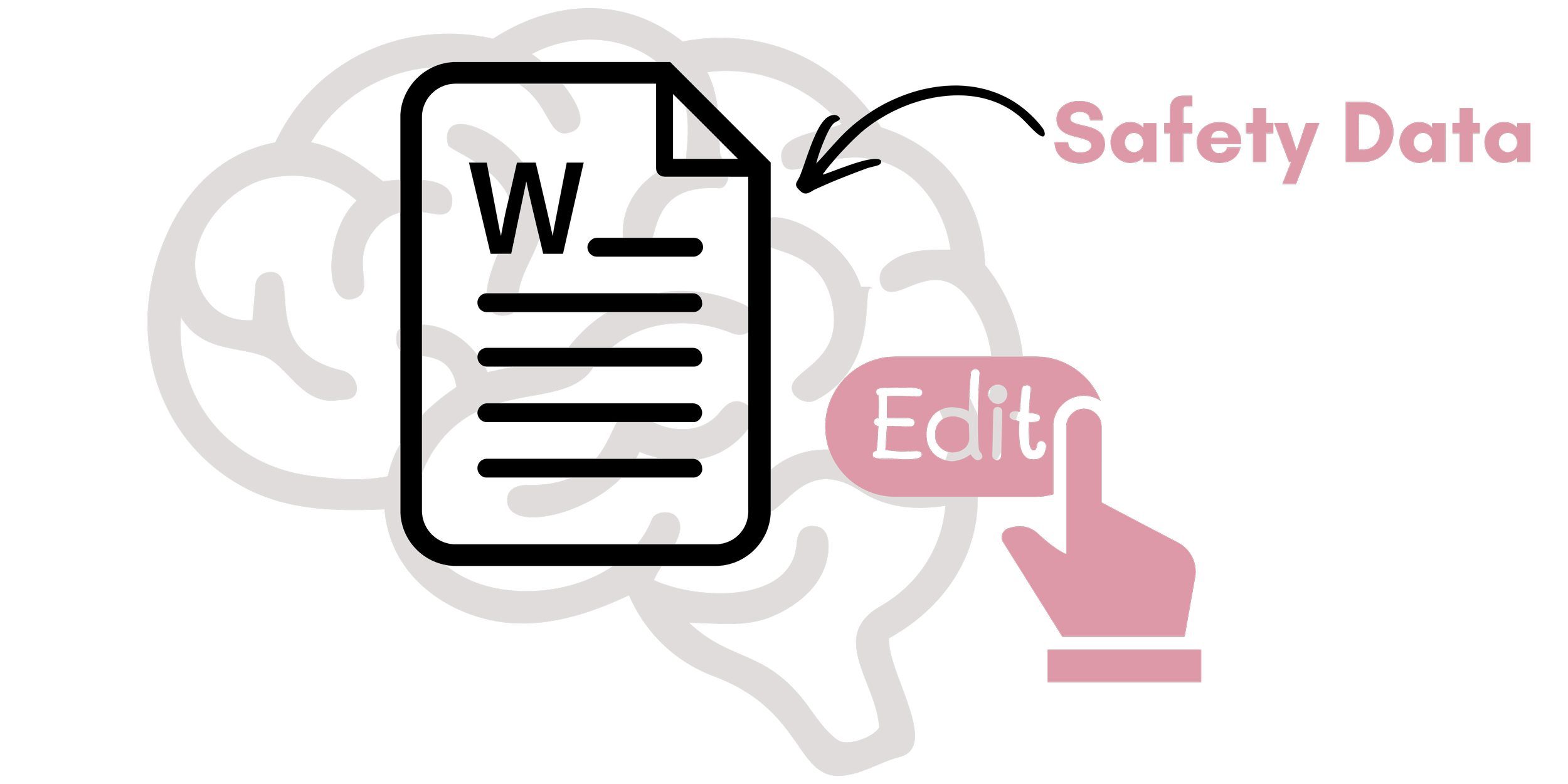
Memory reconsolidation works in a similar way.
We open the file for the relevant emotional learning and update what’s inside.
We add safety information so that when that file gets opened intentionally or unintentionally going forward, your brain and body remain calm.
We can’t erase what happened. We can change how it affects you now.
You keep what the experience taught you that is genuinely useful.
What changes is your automatic emotional and physiological reaction attached to it.
Then, you can think about it or something in the present can even remind you of it, and you remain calm.
You can remember what happened without your nervous system acting as though it is happening again right now.
That is a very different goal from simply learning to cope with a trigger.
Think about a war veteran…who logically knows he’s not at war anymore. But a car backfires, and he instantly finds himself huddled on the ground, transported back to battle, heart racing, blood pressure through the roof, sweating profusely. His body is repeating the trauma response from war…like he’s there again right now. Even though, he’s on a quiet street on a calm, beautiful day.
The same can be happening for you with experiences from your past that made your nervous system feel less safe in the world.
But even memories as intense as this, can be updated, so that the brain and body can no longer replay the trauma response in the present, even if something in the present is reminds you of the past.
I Don’t Want You Managing the Alarm Forever
If your nervous system has learned that a certain smell, body sensation, food, building, medical situation, relationship dynamic, or memory means danger, you can spend an enormous amount of energy trying to calm yourself every time that alarm goes off.
My goal is different.
I want to find out why the alarm keeps going off in the first place.
Then we work with the underlying learning that tells your brain the threat is still present.
As those threat associations change, things that once triggered a strong emotional or physical reaction can begin to feel more neutral.
You don’t have to constantly argue with your brain.
You don’t have to spend every day trying to regulate yourself perfectly.
Your nervous system has less to regulate because it is encountering fewer false alarms.
That creates space for something many people with chronic illness have been missing for a long time:
A body that can stop bracing and get back to living.
What We May Work On Together
Your sessions are individualized around the patterns keeping your nervous system activated.
That may include:
Mold and Chronic Illness Trauma
Being chronically ill can profoundly change your relationship with your body and the world around you.
You may have lost your home, belongings, income, independence, relationships, physical abilities, or trust in your own body.
You may have spent years being dismissed by practitioners while knowing something was deeply wrong.
Those experiences understandably left an imprint.
We can work with the emotional learning that remains after those experiences so your past does not have to continue dictating your physiology in the present.
Fear of Symptoms and Relapse
A symptom that once meant something frightening can become a threat signal all by itself.
A headache, fatigue, dizziness, brain fog, digestive reaction, heart palpitation, or strange body sensation can send your brain immediately into:
Something is wrong.
I’m getting sick again.
What did I get exposed to?
What if this doesn’t stop?
We work on separating the present sensation from all of the fear and history your brain has attached to it, so you stop spiraling with each sensation.
Environmental Hypervigilance
After mold illness, walking into an unfamiliar building can feel like entering a minefield.
You may automatically scan for odors.
Look for water stains.
Wonder whether the HVAC system is contaminated.
Worry about upholstered furniture.
Watch your body for the first sign of a reaction.
Some environmental discernment is appropriate. You don’t need to stop making intelligent decisions about exposure.
The goal is to be able to assess your environment without your nervous system entering emergency mode and expecting to be harmed everywhere you go.
Medical and Treatment Trauma
Some people have really difficult experiences, not only from being sick, but also from trying to treat it.
Supplements.
Medications.
Lab testing.
Doctor visits.
New protocols.
Even the idea of trying something new can create fear because your brain remembers previous reactions, side effects, dismissive practitioners, painful procedures, or treatments that made you worse.
That history can be updated too.
Older Patterns That Predate Your Illness
Chronic illness is not always where the nervous system dysregulation began.
Perfectionism.
People-pleasing.
Feeling responsible for everyone.
Difficulty allowing yourself to rest.
Fear of making mistakes.
Childhood instability.
Relationship trauma.
Medical trauma.
Always needing to be productive.
Never feeling completely safe letting your guard down.
These patterns can leave a nervous system with very little reserve even before physical illness enters the picture.
When relevant, we work with those deeper patterns as well.
Because the goal is a nervous system that feels safer in your life in general.
This Work Does Not Mean Your Illness Was “All in Your Head”
This distinction matters deeply to me.
If you became ill from toxic mold, infection, inflammation, environmental exposure, or another physical condition, nervous system work does not erase that reality.
I do not believe brain retraining makes harmful exposures harmless.
I do not believe every symptom is caused by nervous system dysregulation.
And I do not ask you to ignore symptoms, override your instincts, or convince yourself that environments are safe when they are not.
Your brain and body influence each other constantly.
Physical illness can dysregulate the nervous system.
A chronically dysregulated nervous system can make recovery harder and amplify reactivity long after the original trigger has been addressed.
Both can be true.
My work respects both.
The Goal Is Resilience, Not Perfect Control
Nervous system healing does not mean you will never experience stress again.
And it certainly does not mean you have to become perfectly regulated every minute of the day.
You will not become buddha. Things will still upset you sometimes, but not nearly as many things as before because the past will stop replaying in the present.
So, rather than “perfection”, the goal is a resilient nervous system: one that returns to baseline more easily after stess.
One that knows how to return to groundedness when something is uncomfortable or uncertain.
You can feel overwhelmed and come back down.
You can encounter an uncomfortable sensation without immediately spiraling.
You can walk into a building without spending the next three hours analyzing whether you were exposed.
You can have a difficult conversation without losing the rest of your day.
You can experience a symptom without immediately assuming your recovery is unraveling.
You can make decisions from discernment rather than fear.
Your world begins to get bigger again.
That is what we are working toward.
Calm the Alarm:
Personalized Brain Rewiring and Nervous System Support
Calm the Alarm is my one-on-one brain rewiring program for people whose nervous system remains stuck in patterns of threat, hypervigilance, reactivity, fear, or shutdown.
It is especially well suited to people recovering from mold illness or chronic illness, although the work will also address earlier experiences and trauma that continue to influence nervous system regulation today.
Our work may include:
Identifying the experiences and emotional learnings driving current threat responses
Memory-reconsolidation-based updating of neural networks.
Resolving chronic illness and mold-related trauma
Reducing hypervigilance around symptoms and exposures
Working with fear of relapse or getting sick again
Rewiring reactions connected to medical care or treatment
Building greater autonomic nervous system flexibility
It involves one-on-one brain rewiring sessions and recorded guided processes made specifically for you and what you’re working on to use between sessions.
This is highly individualized work.
We are not moving through the same script or curriculum with every person.
We follow the patterns your nervous system is actually showing us.
Who This Work May Be a Good Fit For
Calm the Alarm may be worth exploring if you:
Have physically improved but still feel stuck mentally, emotionally, or neurologically.
Feel constantly activated, anxious, vigilant, or overwhelmed.
Tend to collapse, shut down, or become profoundly exhausted under stress.
React intensely to environments, symptoms, foods, supplements, or treatments.
Are afraid of another mold exposure or another health relapse.
Understand logically that you are safer now but cannot seem to feel safe.
Have tried nervous system or brain retraining programs but found the effects limited or temporary.
Have done therapy and understand your trauma intellectually but still feel it strongly in your body.
Notice that stress reliably causes physical symptoms to flare.
Are tired of organizing your life around avoiding every possible trigger.
Want to feel calm and appropriately cautious rather than frightened and hypervigilant.
Want to trust your body and your own judgment again.
You do not need to identify as someone who has “trauma” for this work to be relevant.
Sometimes the clearest sign is simply that your present-day reaction feels much bigger than the situation in front of you.
That tells us there may be older information involved.
My Approach Is Personal for a Reason
I’m Dr. Karen Cureton, a naturopathic doctor specializing in mold illness and nervous system health.
I came to this work both professionally and personally.
I spent years dealing with chronic illness, mold illness, and nervous system dysregulation myself. I also tried many of the approaches people commonly use to address trauma and retrain the brain.
This included:
Basic Brain Retraining Approaches: DNRS, Gupta
Talk Therapy
EMDR
Psychedelic Therapy
Energy Work
Shamanic Healing
and more…
Some helped, at least a bit, or temporarily.
But none of them gave me a new default state of safety, calm, and regulation.
Then, I finally found some memory reconsolidation-based approaches that actually allowed me to rewire my traumas, both big and small, so they stopped constantly triggering my nervous system into fight/flight or freeze.
And that’s when I could finally build the a new default nervous system state of feeling safe….and it actually stuck. I didn’t have to constantly work at it, because my brain finally believed me!
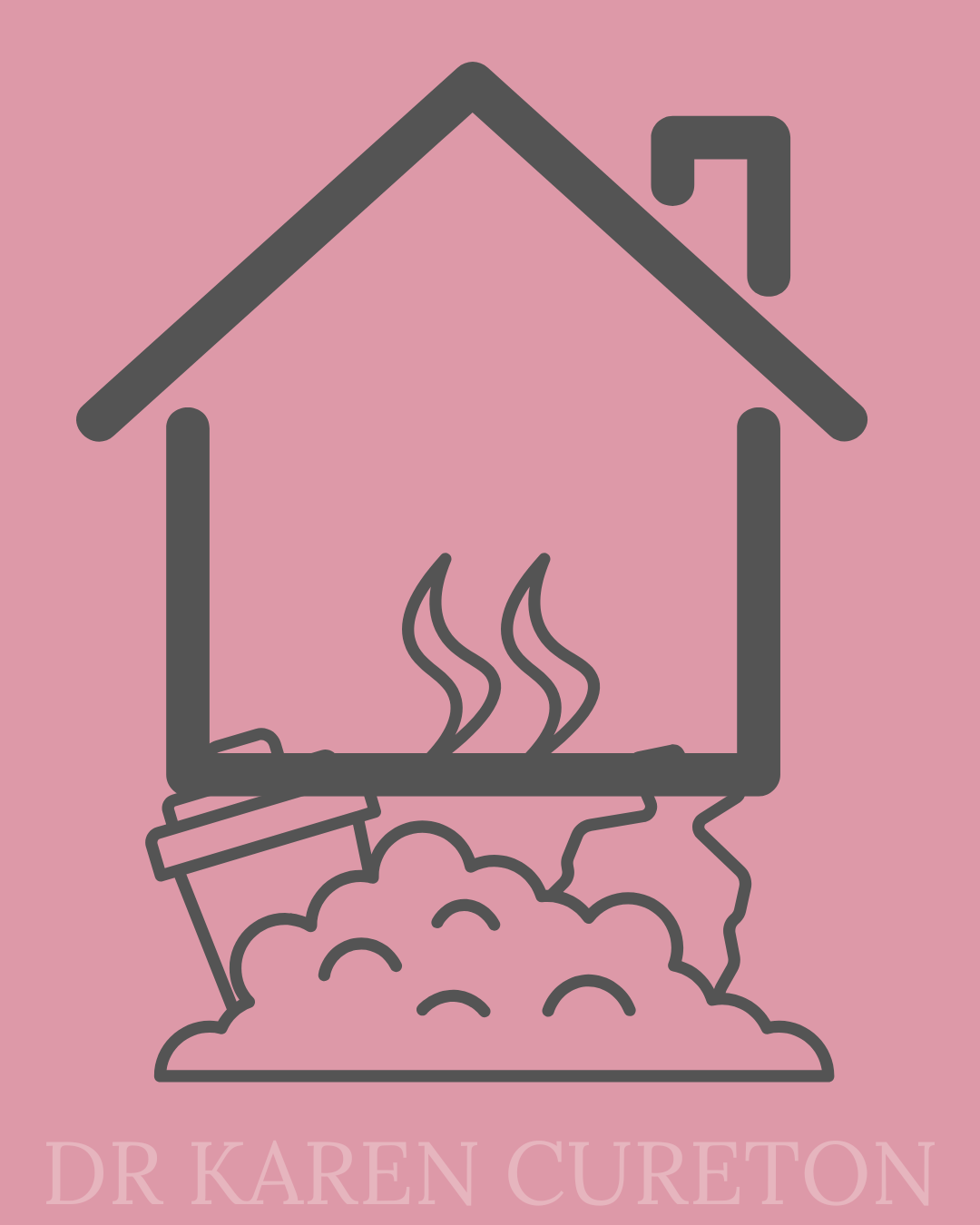
When I was just using the more superficial tools before, it was trying to build my dream house on top of a pile of garbage! It was never stable, and that stench of what was there before just kept wafting up through the new foundation.
And because I also understand complex chronic illness medically, I will never ask you to choose between acknowledging your physiology and addressing your nervous system.
For most people, both are essential.
You Don’t Need to Spend the Rest of Your Life Afraid of Being Triggered
There is a profound difference between knowing that something difficult happened to you and continuing to relive it in your body and mind.
Your past can remain part of your story without continuing to run your nervous system.
You can remember what happened without being pulled back into the fear.
You can protect yourself without living in hypervigilance.
You can listen to your body without monitoring every sensation.
You can make thoughtful decisions about your health without every decision feeling like an emergency.
And you can begin returning your attention to the parts of life that illness pushed to the edges for far too long….joy, creativity, pleasure, human connection, hobbies, time in nature…
Ready to Feel Safer in Your Body & Life Again?
You’ve spent enough time organizing your life around what might go wrong.
This work won’t make you careless.
It will finally bring you the calm, steady, resilience that environmental control cannot.
That calm, resilience looks like
Being able to recognize genuine danger without experiencing everything as danger.
Being able to trust your body without fearing it.
Being able to participate in and enjoy your life instead of constantly monitoring it for threats
Memory reconsolidation is like taking out the garbage….getting back to a fresh, clean slate. So that you can build that dream house on a stable foundation that lasts.
And the coolest part of this process?
It can actually be enjoyable, even fun!
And it can progress a lot faster than anything you’ve experienced before.
Learning how to work with memory reconsolidation changed the way I approached nervous system healing.
Today, it is one of the central tools I use with clients who feel as though they understand what is happening intellectually but cannot get their brain and body to stop reacting.
When you’re ready to help your nervous system feel safer, steadier, and less controlled by old threat patterns, learn more about working with me through Calm the Alarm.
I do this work with people all around the world.
Frequently Asked Questions
-
You’re not alone in that experience.
While those programs can be helpful for some people, they don’t always address the deeper reasons your nervous system is staying stuck in a dysregulated pattern.
So many people don’t get more than in-the-moment improvement with those approaches.
The work I do is different in that we’re not just practicing regulation or trying to build new habits of calm.
In one-on-one sessions, we use memory reconsolidation to address the underlying drivers of dysregulation, including traumas, old emotional learnings, and limiting beliefs that are dictating your nervous system’s default responses.
Because this is personalized and happening in real time, we can follow what your system is actually doing and update the patterns that are keeping you stuck, rather than applying a general protocol.
For many people, this allows for a deeper and more lasting change.
-
Talk therapy is focused primarily on cognitively processing, understanding, and looking at different perspectives of your experiences.
Unfortunately, that does not usually change the way they are stored in your brain and therefore how those past experiences affect your nervous system in the present.
My work is focused specifically on nervous system regulation, rewiring memories and belief systems at the root of dysregulation, and updating the learned threat patterns that may be affecting your functioning and recovery.
The experience and result is quite different from traditional therapy.
Our work together will not involve the diagnosis or treatment of any psychiatric condition. Therefore, it is not a replacement for psychotherapy or psychiatric care when those services are needed.
Some clients use this work alongside therapy, medical care, or other forms of support.
-
I have ways of rewiring traumatic experiences without overwhelming or “flooding” your nervous system.
This approach actually works far better, in my experience, and does not result in retraumatizing your system the way some methods can.
We work gently and within your capacity, and we never have to “sit in” the discomfort. In fact, I don’t even need to know the details to help you rewire it so that it stops traumatizing you.
The purpose is to change your brain’s relationship to the experience. It turns out “suffering through it” isn’t necessary or very effective for making that shift.
-
No.
Nervous system regulation can produce very real physical changes because your autonomic nervous system influences processes throughout your body.
That does not mean every symptom begins in the nervous system.
Physical illness can dysregulate the nervous system, and nervous system dysregulation can then contribute to ongoing physical symptoms and reactivity.
I take both seriously.
-
The goal is not to train yourself to tolerate an unhealthy environment or convince yourself that toxic exposure is safe.
Mold and other environmental exposures still need to be addressed appropriately.
What we want to reduce is the disproportionate survival response that can remain after significant exposure has ended, or that can occur with small or uncertain triggers that your brain has learned to associate with a past threat.
Appropriate discernment stays.
The panic does not need to.
What I see is that often after a significant mold exposure, many people remain exquisitely sensitive to mold, mycotoxins, and dust, etc. Once there’s no significant ongoing exposure, we can reverse these hypersensitivity reactions through retraining the nervous system. We can remind it that small or temporary exposures are safe…so you can expand your life again.
-
Understanding what happened and changing the emotional learning associated with what happened are not the same thing.
You may be able to explain an experience clearly, know exactly why it affected you, and still notice your body tighten, your heart race, your stomach drop, or intense emotion arise when something reminds you of it.
That tells us your nervous system is still replaying the trauma in the present, even if you feel like you’ve logically “processed it”.
Memory reconsolidation gives us a way to actually update the file in your brain associated with that trauma so that it can no longer continue to trigger a nervous system reaction. That’s real trauma resolution.
-
Yes, in fact nervous system work is foundational to your body’s resilience and the first thing I help people with who are still being exposed to toxic mold.
There are many other ways I suggest you protect yourself and improve resilience through functional medicine, but your nervous system is an integral part of staying as well as you can and recovering faster once you’re free of the exposure.
In fact, many toxic mold specialists are now estimating that limbic and nervous system regulation can account for up to 60% of the recovery process.