
There is no single honest answer to how long mold illness recovery takes, and anyone who gives you an exact date is guessing.
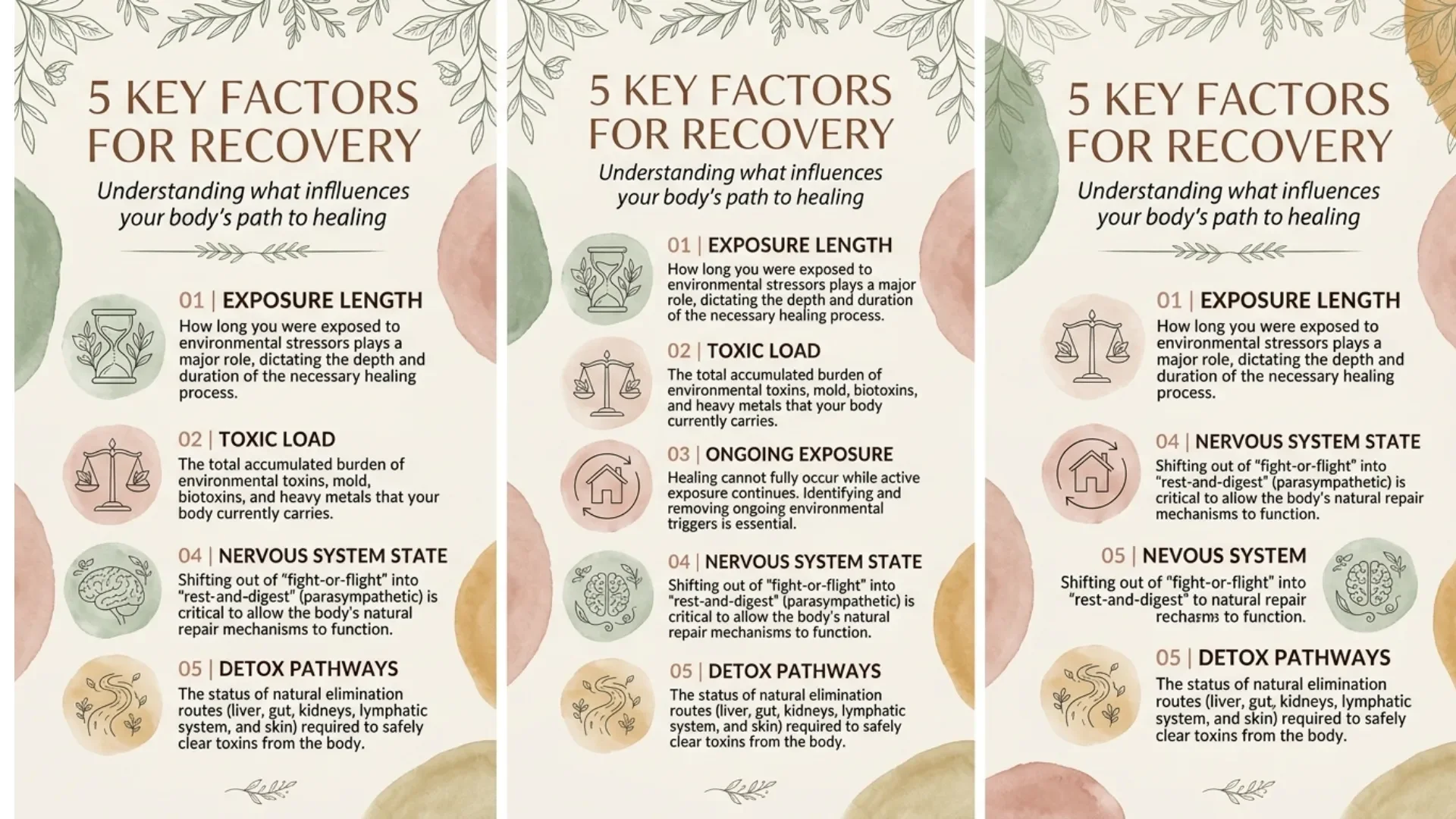
Recovery depends on whether you are still in the exposure, how long you were exposed, how severe the toxic exposure was, how much damage has occurred in the body, how much toxin your body is still carrying, whether or not you were colonized with mold, how your nervous system is responding, and how well your cells and detox pathways are working. Some people feel meaningful improvement within the first few months. Others need longer.
What matters more than a number is understanding what actually moves your timeline.
Mold Illness Recovery Depends, and Here's What It Depends On
I know that’s not the answer you came for. When you’ve been sick for years, "it depends" can feel like a door closing in your face. You want a date to count down to, something to tell your family, a finish line to aim at. So let me open that door back up by telling you exactly what it depends on, because those variables are not vague. They are the specific things you and I can actually work with to change your pace.
6 things that actually change your timeline
Six factors do most of the work in setting the pace of recovery.
The first is whether you are still being exposed, which I will come back to because it matters more than almost anything else on this list.
The second is how long you were exposed and how severe the exposures were. A few months in a water-damaged apartment is a very different situation from a decade in a house you never suspected with mycotoxin levels off the charts. Longer exposure and greater toxin levels in the home usually means more to unwind.
The third is your total toxic load, meaning how much mycotoxin your body has accumulated and how backed up your systems already are. Two people with the same exposure can carry very different loads depending on how efficiently their body is able to detoxify mycotoxins. We need to improve that efficiency and then get the backlog out of the body, and that takes time.
The fourth is whether or not you were colonized with mold. When people have lived in a moldy building for long enough, mold will often make its way into the body and grow inside - in the sinuses, digestive tract, or lungs. There mold can keep making toxins that make you sick and causing chronic inflammation. Part of healing from mold, is getting rid of the mold growing in your body.
The fifth is how your nervous system is responding. A body stuck in a chronic state of alarm heals more slowly, because it is pouring energy into survival instead of repair.
The 6th is how much damage was done by mold toxins. Mycotoxin illness is a multi-system injury. The toxins can do damage in any system of the body, and recovering requires repairing those damaged cells and tissues so they can function normally again.
This is also why I don’t give predicted timelines or promised outcomes, and I’m wary of anyone who does. Recovery is genuinely individual. A confident number pulled from someone else's case, or from an average, is not a number that applies to your body, your exposure, or your life. I would rather tell you the truth and then help you move the real levers than hand you a date I cannot stand behind.
It’s also worth saying that these five factors interact with each other, which is part of why a simple timeline is impossible. A sluggish detox pathway makes a heavy toxic load take longer to clear. A nervous system stuck in alarm keeps the whole body inflamed, and slows detox and repair further. Ongoing exposure undermines all of it at once. They are not five separate dials and you turn one at a time. They are tangled together, and progress on one often depends on progress on another. When we work together, part of the job is figuring out which of these is the biggest bottleneck for you right now, because that is usually where the most time is being lost and where the most can be gained.
Why "still living in mold" resets the clock every single day
If you take one practical thing from this article, take this. Detox, killing mold in your body, or supporting repair of damaged tissues can help, but won’t get you well while you’re still being exposed, and this is the trap more people fall into than any other.
Binders and detox support can capture toxins in the gut, which is useful, but they cannot possibly keep up with the level of mold you are breathing in every single night while you sleep. Each day in the exposure quietly reintroduces the problem you are working so hard to clear. It is like bailing water out of a boat that still has a hole in the bottom. You can bail all day and stay exactly where you started, then wonder why nothing is improving.
This does not mean treatment is hopeless if you cannot leave right away. Plenty of people genuinely cannot move or remediate on a dime, and I work with that reality all the time. For those patients I build protocols to support and protect the body in the meantime, to reduce the load and build resilience. But I am honest with them that the fastest timelines almost always belong to the people who get out of the exposure soonest. Getting the source handled is usually the single biggest thing that moves the clock.
Why Some People Stall Even When They're Doing Everything Right
Here is a pattern I see constantly, and it’s a heartbreaking one. Someone does the testing, removes the exposure, follows the plan to the letter, takes every supplement on schedule, and still does not feel better.
They start to wonder what’s wrong with them, whether they’re the exception, whether they’re broken in some way that cannot be fixed. Usually, nothing is wrong with them. Something is just being missed.
When the nervous system is the thing holding recovery hostage
For many people who have stalled, the thing holding recovery hostage is the nervous system. After years of illness and toxic stress, the nervous system can get locked into a chronic state of alarm. It learned that the body was under threat, and it has not received the message that the threat is over. In that state, the body stays inflamed and reactive no matter how clean the environment gets or how good the treatment plan looks on paper.
This is why I treat nervous system dysregulation as a core part of recovery rather than an optional add-on, and it is why nervous system work can be the missing piece in mold recovery. When that alarm finally downshifts, a lot of people describe it as the moment their recovery actually started moving, after months of feeling stuck. The detox they had been doing all along suddenly seems to take hold, because the body is finally in a state where it can heal. For some patients, that work matters as much as the detox itself, which is why I offer dedicated nervous system healing sessions alongside the medical treatment.
For the people who are so sensitive they cannot tolerate any supplements, medications, nervous system work should be the first step. This is what will open up tolerance again, so that other necessary treatments can be used.
What Progress Actually Looks Like (It's Rarely a Straight Line)
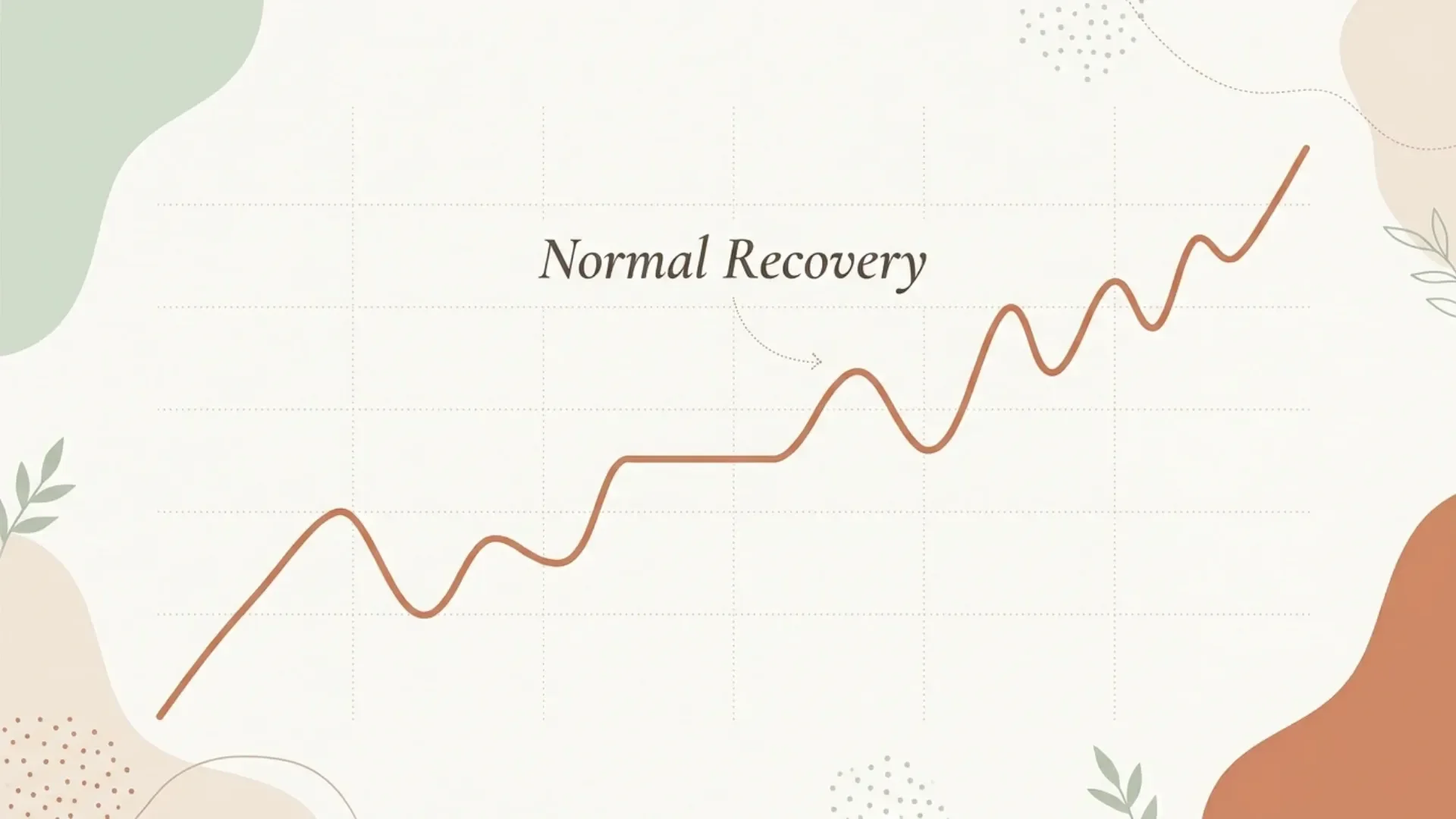
One more thing worth setting expectations around, because it protects you from a lot of unnecessary fear. Recovery is not a clean upward slope where every week is better than the last. When you do not know that going in, the normal bumps can feel like proof that everything is falling apart.

Flares, plateaus, and why they're not failure
Expect flares. Expect plateaus. Expect weeks where you feel noticeably, wonderfully better, followed by a stretch that feels like a step backward for no obvious reason. That up and down is the normal texture of healing from a complex, multi-system illness. It is not a sign that treatment stopped working or that you did something wrong. A flare after a good run is not the illness coming back. It’s often just the messy, nonlinear way a body actually detoxifies and repairs itself.
Part of the reason people react so strongly to those dips is that the illness itself is exhausting and frightening, and every setback pokes at that fear. I explored that more in mold illness trauma and how to heal it. Knowing the pattern ahead of time takes some of the fear out of the dips, so a hard week stays a hard week instead of becoming a spiral.
I Won't Promise You a Date. I Will Help You Find What's Slowing You Down.
You deserve honesty more than you deserve a comforting number, and the honest truth is that your timeline is yours alone. What I can tell you is that when the real drivers are found and addressed properly, real healing becomes possible, and the pace often picks up noticeably once the right things are finally in place.
If you want to understand what might be setting your pace, book a free Chronic Illness Clarity Call. We can discuss where you’re starting from, what’s slowing you down, and whether working together is the right next step for you.
Meta title: How Long Does Mold Illness Recovery Take?
Meta description: There is no single timeline for mold recovery. Learn the five factors that actually change how long it takes and why some people stall.
