
Most failed mold treatment is not actually a failure. It’s an unfinished diagnosis. The usual culprits are ongoing exposure, detox started before drainage pathways were open, unaddressed mast cell activation, the wrong diagnosis, and a nervous system still locked in survival mode. When people do a protocol and stay sick, one of these is almost always the reason.
Here is how to tell which one is holding you back and what to do about it.
First, the Obvious One: Are You Still Being Exposed?
Before we get into the subtle reasons, we have to rule out the loud one, because it quietly undoes everything else you’re trying to do. If this one is in play, nothing else you add on top will get you fully well.
Why binders and detox can’t get you well if you're still being exposed
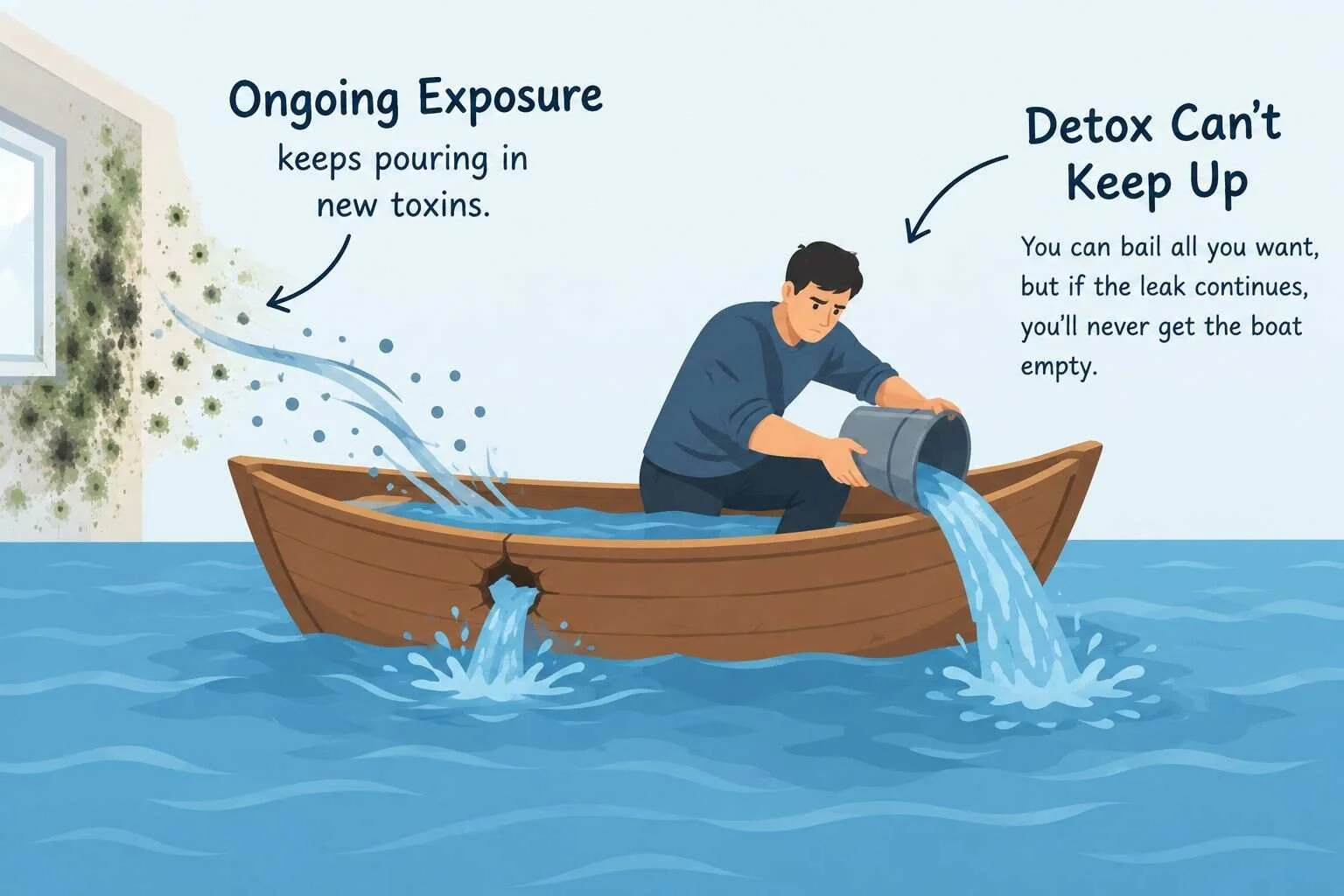
If you are still living or working in the mold, your healing has a ceiling it simply cannot break through, no matter how good the protocol is. Binders and detox support can capture toxins in your gut and support the liver and kidneys to detox efficiently, which is genuinely helpful, but they cannot keep pace with mycotoxins you are inhaling every single day and every single night. The exposure resets the problem faster than any protocol can clear it. You take two steps forward then two steps back.
This is the single most common reason mold treatment stalls, and it’s worth being really honest with yourself about.
If you moved away from your last moldy home, did you test the new one with an ERMI to verify it was a mold safe space?
If you remediated your home. Did you do post-testing with an ERMI 6 weeks after remediation completed to verify that the remediation was successful?
Did you do small particle cleaning of your belongings before moving or during remediation and get rid of items that can’t be decontaminated?
If your home is now testing safe and your belongings are clean, have you tested the other places (with an ERMI) where you spend lots of your time? (usually work, school, a partner’s home, or the other parent’s home in the case of a minor)
Have you done a repeat mycotoxin antibody test 6 months after you think the exposure stopped to verify that IgE mycotoxin levels are now within range?
If you have CIRS, have you tested your home for endotoxins or actinobacteria?
My motto is test, don’t guess for a reason. I’ve had too many patients get stuck in their healing because they thought they had fixed the environment, but they hadn’t.
If you haven’t done these things, it’s not your fault. Nobody educated in the world of mold taught you what needed to be done to ensure you stopped your exposure.
If you cannot move or remediate right away, and many people genuinely cannot, that does not mean treatment is pointless. It means the plan has to be built specifically to protect and support your body while you work toward getting out, which is exactly how I approach patients who are still in the exposure. But we have to name the exposure honestly first, because pretending it is not there is how people spend money and energy spinning in place. The goal must remain to stop the exposure as soon as it’s feasible.
The Reasons Nobody Told You About
Once ongoing exposure is actually handled and you’re still not improving, we move into the reasons most people were never told about by whoever treated them first.
These are the ones I see over and over in patients who arrive in my practice having "failed" treatment somewhere else, often more than once, and having lost faith that they can get well at all.
Drainage was never opened before detox started
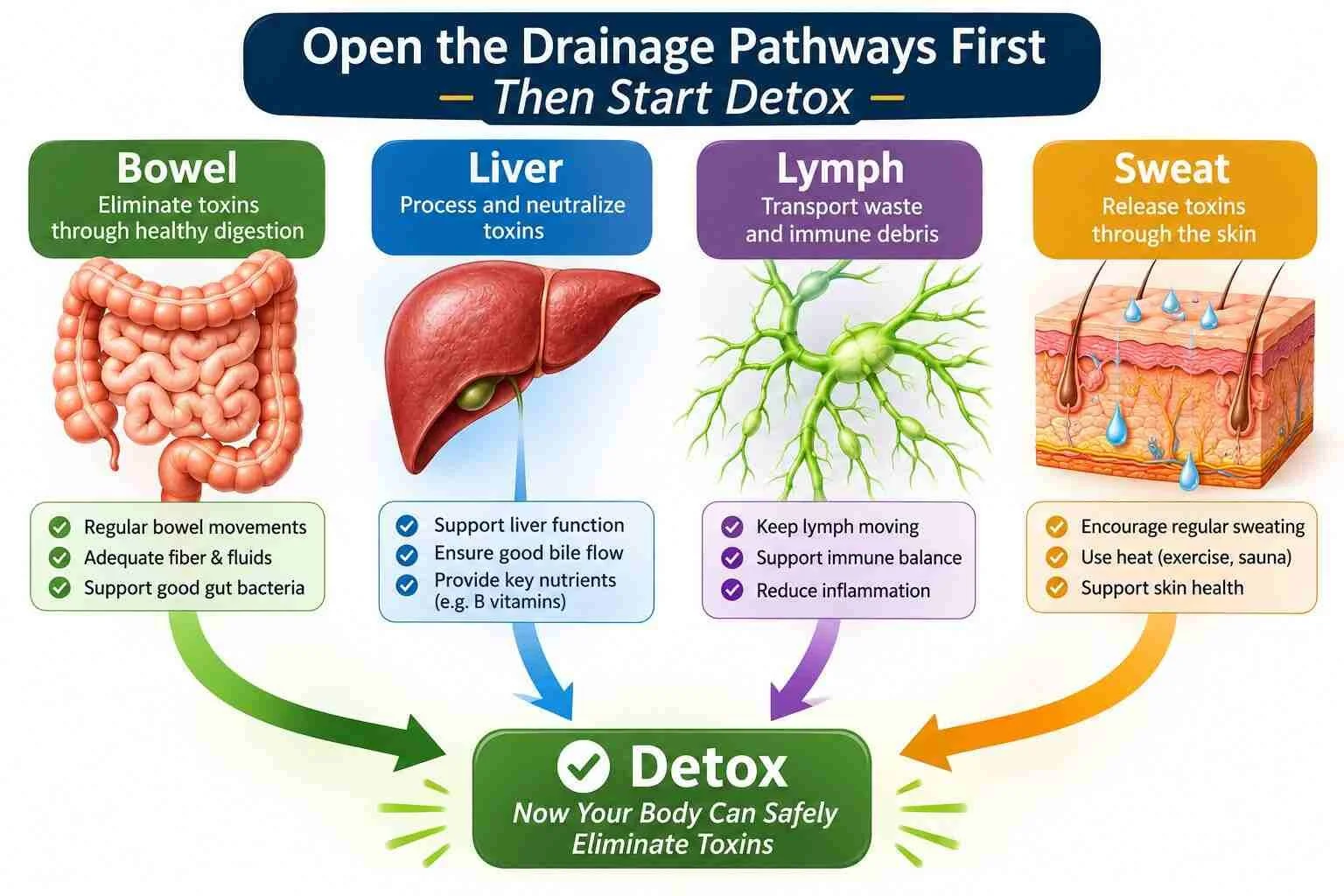
Here is a mistake I see constantly, and it causes a lot of needless suffering. Someone jumps straight into aggressive binders or a hard detox before their body is actually able to move toxins out of the system. The intention is good. The order is wrong.
Your detox and drainage pathways, meaning your bowels, liver, bile flow, lymph, and sweat, all have to be working reasonably well before you start pulling toxins loose from where they are stored. If those exit routes are sluggish or blocked, you stir up mycotoxins and then give them nowhere to go. They recirculate, and you end up feeling dramatically worse, sometimes worse than before you started.
That crash is very often misread, by patients and even by providers, as proof that the protocol is working and the toxins are "coming out." Usually it’s the opposite. It’s a warning sign that drainage was never opened, and the fix is not to push harder. The fix is to slow down and support elimination first, then detox from a body that can actually keep up.
Mast cell activation is sabotaging every input
Mold and mast cell activation very often travel together, and unrecognized mast cell activation is a frequent, overlooked reason treatment stalls out. When the mast cells are inflamed and on high alert, the body starts treating almost every input as a threat, even gentle supplements, even the binders that are supposed to help. Every attempt to detox triggers a flare of symptoms, so the person reacts to everything and cannot tolerate the very treatment meant to get them well.
When that is what is happening, pushing harder is exactly the wrong move. It just provokes more flares and convinces the patient their body is hopeless. The system has to be calmed and stabilized first, before any meaningful detox or colonization treatment can be tolerated at all. Skipping that stabilization step is why some sensitive patients feel like they cannot take anything without a reaction, and why they slowly give up. It was not that treatment could not work. It was that the sequence set them up to fail.
You're treating the wrong problem (or only part of it)
Sometimes treatment isn’t working for the plainest reason of all: it’s aimed at the wrong target. Mold allergy, mold toxicity, CIRS, and colonization are four different problems that look alike on the surface, and a plan built for one of them will not fix another.
If someone was treated for a simple mold allergy when they actually have full CIRS, or if their colonization was never identified and addressed, they stay sick no matter how faithfully they follow every instruction they were given. They did everything right. The map was just wrong. Getting the diagnosis genuinely precise, and catching the pieces that were missed, is often the single thing that changes everything.
There is also a subtler version of this problem: treating only part of what’s there. Someone gets an accurate mold toxicity diagnosis and a solid detox plan, and it genuinely helps with some of their symptoms. But the damage done by the toxins never gets its own targeted treatment, or a gut colonization keeps feeding the fire from the inside.
So they improve partway and then stall, better than they were but nowhere near well, and they can’t understand why the same approach that worked at first suddenly stopped. It usually didn’t stop. It just reached the limit of the one piece it was built to address, while the other pieces kept running untouched. This is why mapping the whole picture early matters so much, rather than discovering piece by piece, over months and lost time, that there was always more going on.
The Missing Piece: A Nervous System Stuck in Survival Mode
If you’ve handled the exposure, opened your drainage, calmed the mast cells, confirmed the diagnosis is right, and made sure the treatment plan is addressing the 5 pillars of mold recovery, but you’re still not where you want to be, there is one more piece that is almost always overlooked. In my experience it is the most commonly missed of all of them.
Why some people clear the toxins and still don't feel better
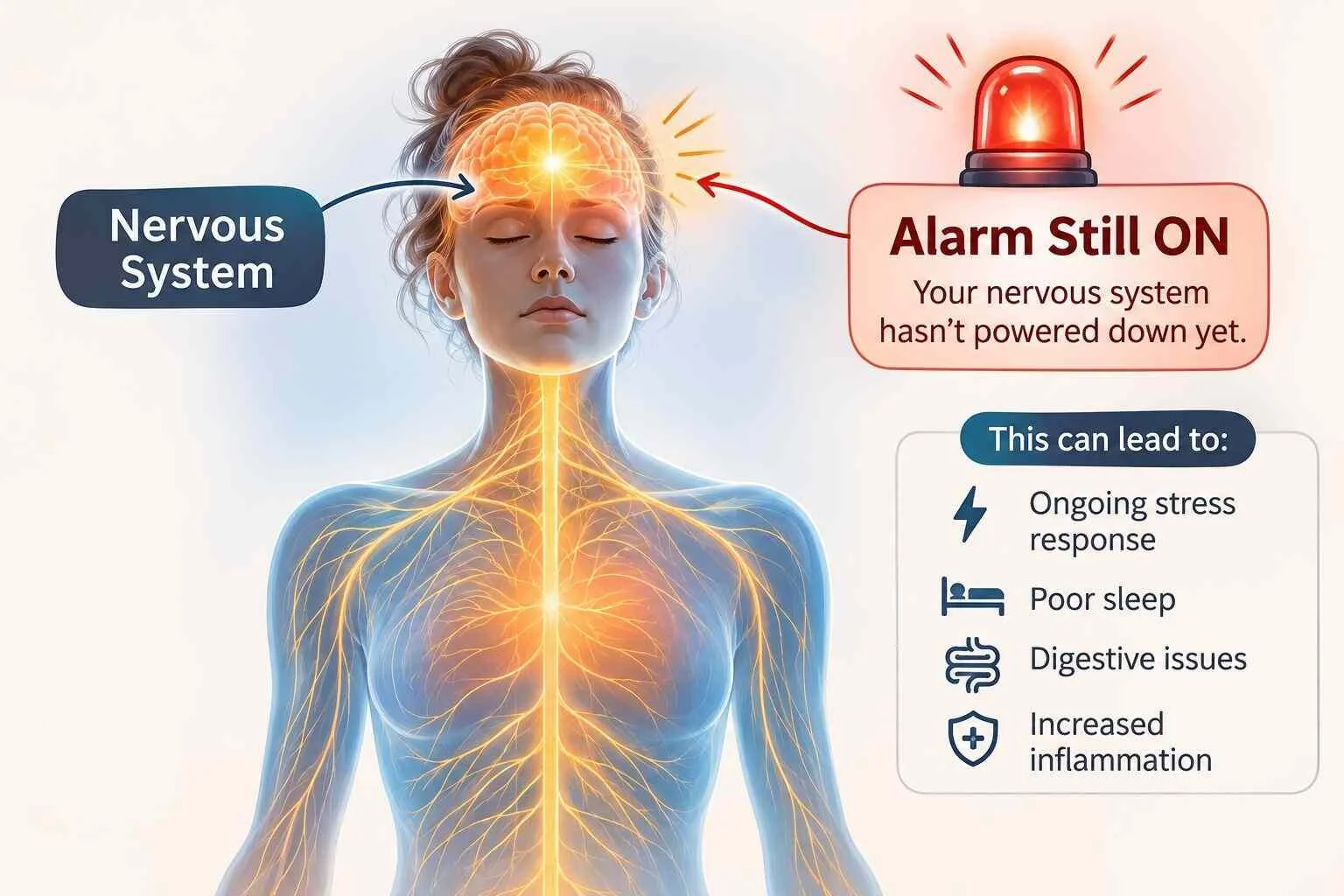
When the body has been under the stress of chronic illness and toxic exposure for years, the nervous system can get stuck in a chronic state of survival and alarm. It learned, understandably, that the body was in danger.
And once it’s locked into that pattern, it keeps running the same inflammatory, defensive programs no matter how clean your environment is now or how well your detox is going. The threat is over, but the nervous system never got the memo. So you can clear the toxins, do everything correctly, and still feel terrible, because the body is still bracing for a danger that has already passed. And survival mode dramatically affects how we feel and how our body functions. A lot of symptoms and conditions can be caused or fed by a dysregulated limbic system and nervous system.
This is the piece I see missed most often, and it’s why I treat nervous system dysregulation as a core part of recovery rather than an afterthought tacked on at the end. I explained the mechanism in more detail in the nervous system's role in mold recovery. And because going through this illness is genuinely stressful and even traumatic for so many people, which itself feeds the alarm state, I also wrote about mold illness trauma and how to heal it.
For patients who are stuck right here, at the point where the toxins are handled but the body still will not settle, dedicated nervous system healing work is very often what finally gets things moving again.
Failed Treatment Is Usually an Unfinished Diagnosis
So if your mold treatment is not working, I want you to reframe what that actually means, because the story you tell yourself about it matters. It very rarely means you are a lost cause, or that you are one of the unlucky ones who just cannot get better. It almost always means something in the picture has not been found yet or has not been addressed in the right order or the right way.
The way forward is to figure out which piece is missing in your particular case. A good starting point is a free Chronic Illness Clarity Call with me, where we can assess how you’re doing, look at what’s already been tried, and find the gap that’s been holding you back. If we end up working together, we can then build a plan around that missing piece instead of repeating the thing that did not work.
